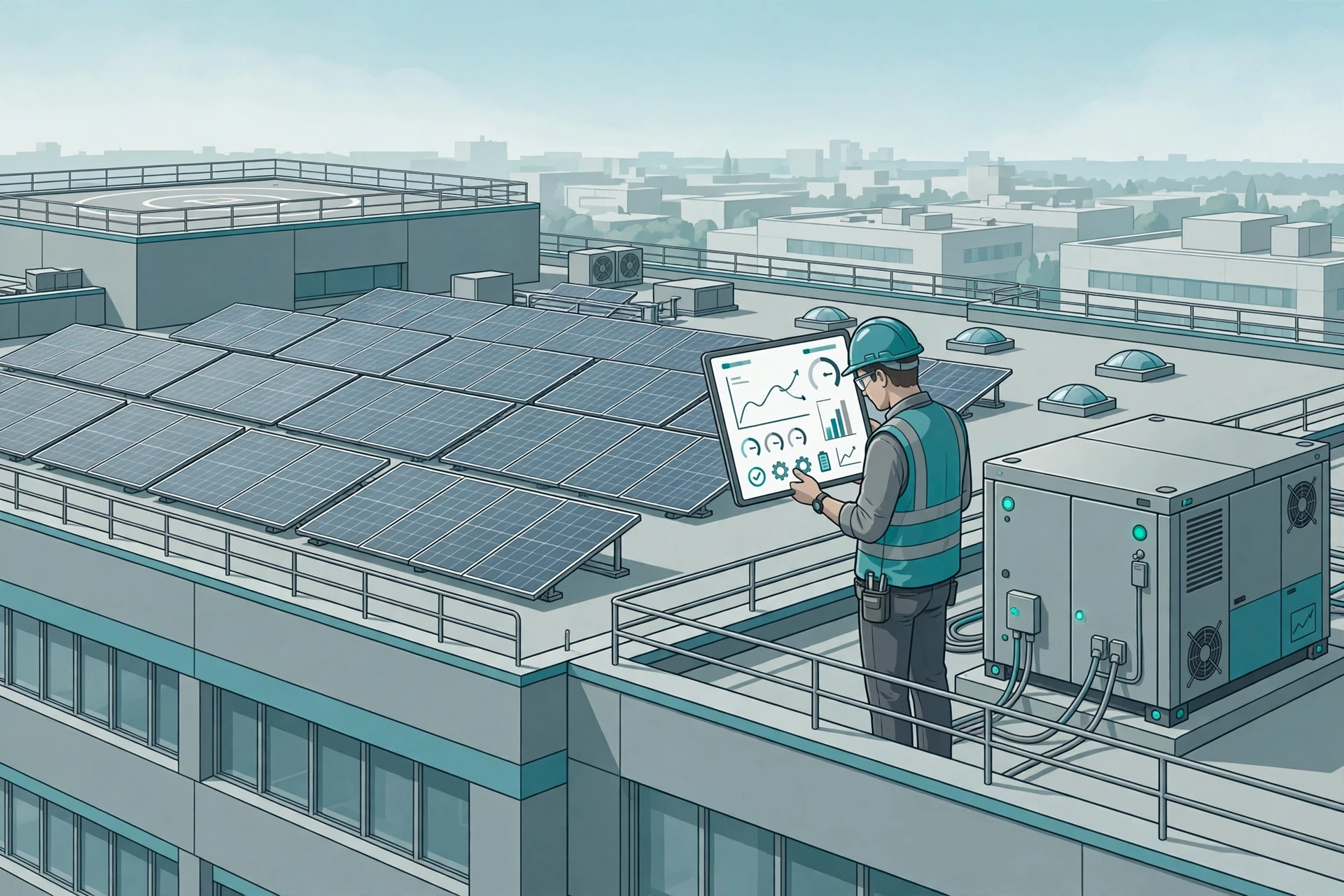
What trends are shaping healthcare facility operations in 2026?
Five trends are reshaping healthcare facility operations in 2026: (1) decarbonization pressure — hospitals face emissions targets and energy-cost volatility; (2) AI-assisted maintenance — predictive analytics moving from pilot to production on critical equipment; (3) workforce shortage — the facilities skilled-trades gap keeps widening, pushing automation and outsourcing; (4) resilience planning — climate-driven storms, heat, and grid instability making redundancy a board-level topic; and (5) the 2026 code cycle — FGI’s renamed Codes, evolving ASHRAE standards, and pending CMS updates changing what “compliant” means.
What each trend demands
- Decarbonization: energy audits, electrification planning, and efficiency retrofits competing for capital against clinical projects.
- Predictive maintenance: sensor data on chillers, air handlers, and generators catching failures before they become outages.
- Workforce: cross-training, apprenticeship pipelines, and managed-service contracts filling the trades gap.
- Resilience: microgrids, flood hardening, and extended fuel/water autonomy moving from nice-to-have to required.
- Codes: FGI Codes (2026), ASHRAE 170-2021 enforcement spreading, and the proposed CMS life-safety updates.
The 2026 facilities leader is an energy manager, a data analyst, and a recruiter.
FAQ
What is the biggest trend in healthcare facilities for 2026?
Decarbonization and energy-cost pressure — efficiency and electrification competing for capital.
Is AI used in hospital facility management?
Increasingly — predictive maintenance analytics on critical equipment is moving into production.
What code changes matter in 2026?
FGI’s renamed Codes, spreading ASHRAE 170-2021 enforcement, and proposed CMS life-safety updates.