How does ASHRAE 170 address humidity control in hospitals?
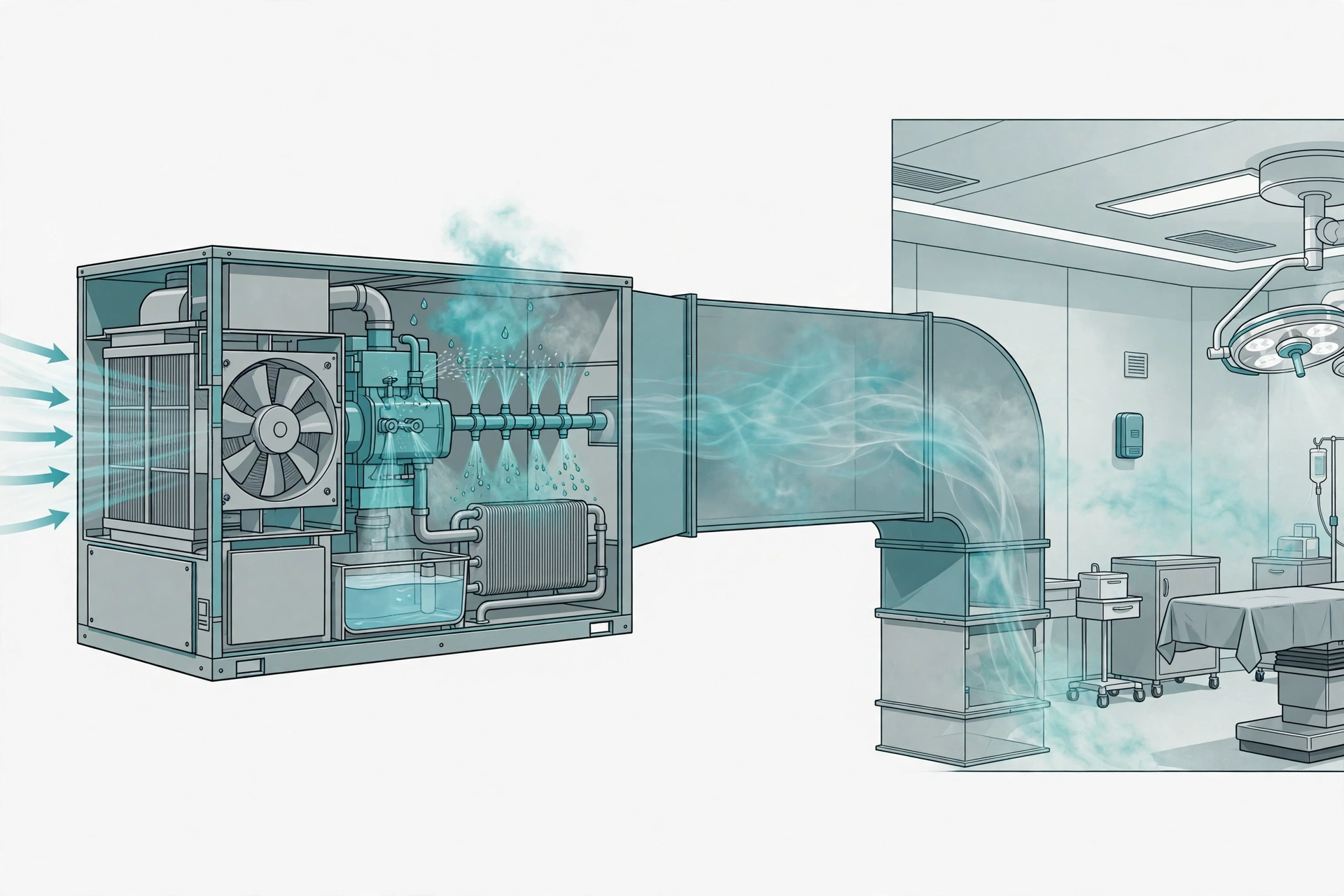
ASHRAE 170 sets relative humidity ranges per space type: operating rooms, procedure rooms, and trauma rooms at 20–60% RH; most other clinical spaces capped at 60% maximum (some at 65%). The critical history: the 2017 edition lowered the OR minimum from 30% to 20% — a major change driven by evidence that low humidity doesn’t increase surgical site infections, saving enormous humidification energy and cost.
Key humidity requirements (170-2021)
- Operating rooms, procedure rooms, trauma rooms, C-section delivery: 20–60% RH.
- Patient rooms, ICUs, recovery, ED treatment: maximum 60% RH (no minimum).
- Waiting areas, some support spaces: maximum 60–65% RH.
Why humidity matters both ways
Too high (above 60%): mold and microbial growth in ductwork and building materials, condensation on cool surfaces. Too low: static electricity (a concern around flammable anesthetics historically), staff and patient comfort, dry mucous membranes. The 20% minimum reflects the finding that the infection risk of lower humidity was overstated — but facilities in dry climates still humidify for comfort and equipment.
Operational notes
Humidity is controlled by the HVAC system, not room devices — portable humidifiers in clinical spaces are an infection risk and generally prohibited. Monitor and trend RH in ORs and other controlled spaces; excursions outside the range are survey-notable.
Twenty percent changed everything — billions in humidification, reconsidered.
See OR vs. procedure room ventilation and recent ASHRAE 170 changes.
FAQ
What humidity does ASHRAE 170 require for operating rooms?
20–60% relative humidity (the minimum was lowered from 30% in the 2017 edition).
Why was the OR humidity minimum lowered?
Evidence showed low humidity doesn’t increase surgical site infections — the change saves major humidification energy and cost.
Can I use portable humidifiers in patient areas?
No — they’re an infection risk; humidity must be controlled by the HVAC system.