What are the most common NFPA 101 deficiencies in hospitals?
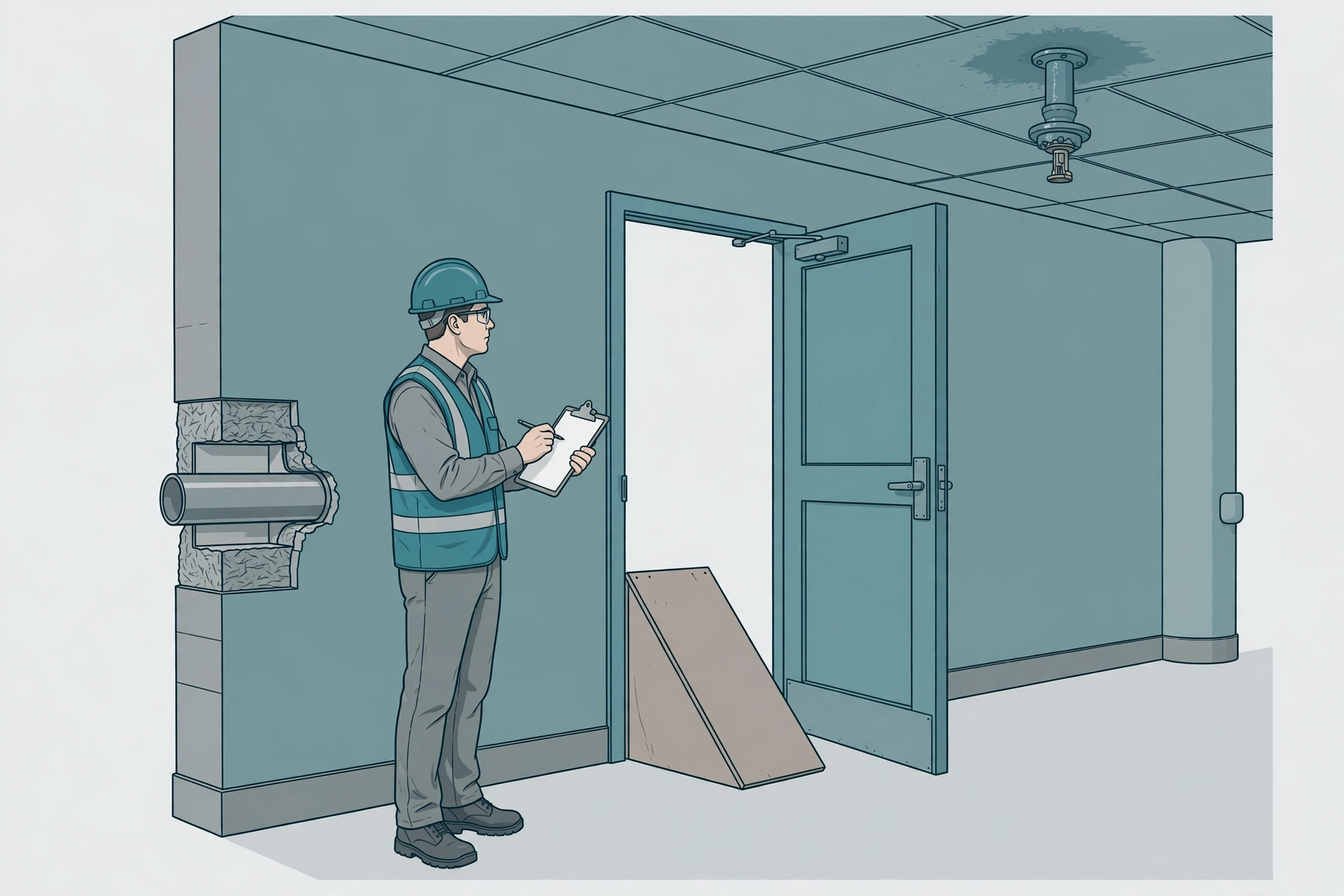
The most-cited NFPA 101 deficiencies in hospitals cluster around a short list: unprotected penetrations in fire/smoke barriers, corridor doors that don’t close and latch, sprinkler and fire alarm testing/maintenance gaps, corridor width obstructions and storage, emergency generator testing documentation, and fire drill deficiencies (frequency, conditions, documentation). These are the K-tags surveyors write most — and nearly all of them are maintenance and discipline failures, not design problems.
For the full picture of how NFPA 101 applies to your buildings, from occupancy chapters to K-tags and waivers, see our complete guide to the NFPA 101 Life Safety Code for healthcare facilities.
The repeat offenders
- Barrier penetrations: pipes, cables, and ducts punched through rated barriers without UL-listed firestop — the single most common finding.
- Doors: corridor and smoke-barrier doors propped open, failing to close/latch, missing or painted-over labels, gaps exceeding tolerance.
- Sprinklers/alarms: missed quarterly/annual testing, painted or loaded sprinkler heads, obstructed coverage, alarm panel troubles ignored.
- Corridors: equipment and storage reducing clear width below minimums; combustible storage in corridors.
- Generators: monthly load testing not performed or not documented to the required standard.
- Fire drills: not quarterly on every shift, not under varying conditions, coded announcements misused, poor documentation (K-712).
- Electrical: extension cords as permanent wiring, missing outlet covers, panel access blocked.
Why the same deficiencies repeat
Almost none of these are capital problems — they’re rounds, training, and work-order problems. Penetrations happen every time IT runs a cable; doors get propped by staff who don’t know why they matter; testing gets deferred. The facilities that stay clean run continuous surveillance: barrier rounds, door checks, and a testing calendar that doesn’t depend on anyone’s memory.
Surveyors don’t find new problems. They find the same ones, again.
See NFPA 101 for healthcare and Joint Commission’s most common findings.
FAQ
What is the most common NFPA 101 deficiency?
Unprotected penetrations in fire and smoke barriers — holes punched for pipes/cables without proper firestopping.
Are corridor doors a common citation?
Yes — propped doors, doors that don’t close and latch, and damaged or missing labels are perennial findings.
How do hospitals prevent repeat deficiencies?
Continuous surveillance: barrier rounds, door checks, a testing calendar, and staff training on why each element matters.