What is a HEPA-filtered negative air machine used for in hospitals?
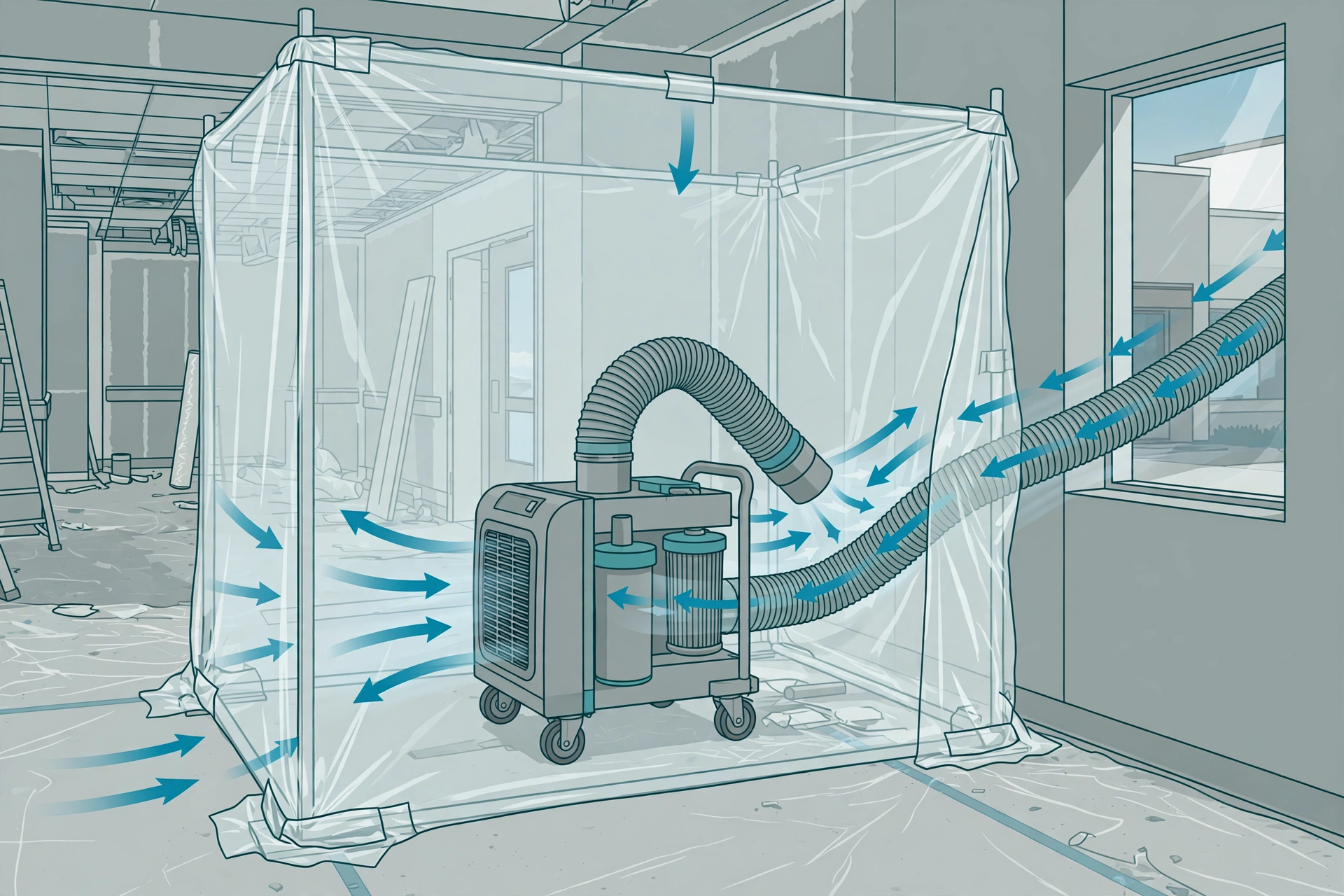
A HEPA-filtered negative air machine (NAM) is a portable air filtration unit that draws contaminated air through a HEPA filter (99.97% efficient at 0.3 microns) and exhausts it — creating negative pressure inside a construction containment zone so dust and pathogens can’t escape into occupied areas. It’s the engine of ICRA containment: the barrier holds the dust in, the NAM makes sure the air only flows one direction — inward.
The three jobs it does
- Creates negative pressure. By exhausting more air than enters, the NAM keeps the work zone negative relative to adjacent spaces; -0.01″ water column is a widely used facility target, not an ICRA 2.0 or CDC requirement. Air flows into the containment, never out.
- Filters the air. HEPA filtration captures 99.97% of particles at 0.3 microns — the dust, mold spores, and Aspergillus that threaten immunocompromised patients.
- Provides air changes. Continuous filtration dilutes airborne contaminants inside the work zone, protecting workers and reducing the dust load that escapes at shift changes.
Where the exhaust goes
Best practice: exhaust directly outdoors, at least 25 feet from entrances, air intakes, and windows — in which case HEPA filtration of the exhaust may not be required. If exhaust is discharged indoors, it must be HEPA-filtered, with filtration verified by particulate measurement at no less than 99.97% efficiency before work starts — and the system must not alter airflow or pressure relationships in other areas.
Testing and compliance
HEPA equipment must be integrity-tested before use — typically DOP (dispersed oil particulate) challenge testing by a certified independent contractor — with a legible label showing test date, testing party, and expiration. Tests are generally valid for six months provided the unit stays in the same building with the same filters, unmoved and unmodified.
The barrier contains. The NAM directs.
See negative air pressure in hospital construction and the ICRA matrix and barriers guide.
FAQ
What does HEPA stand for and what does it capture?
High-Efficiency Particulate Air — 99.97% of particles at 0.3 microns, including construction dust, mold spores, and Aspergillus.
Must negative air exhaust go outdoors?
Best practice is direct outdoor exhaust (25+ feet from intakes/entrances/windows). Indoor discharge must be HEPA-filtered with verified 99.97% efficiency.
How often must NAM HEPA filters be tested?
Integrity-tested before use (DOP challenge), typically valid six months if the unit stays in place with the same filters.