Pandemic Preparedness 2026: Updated Surge Capacity Standards, Ventilation Upgrades, and Infection Control Lessons Learned
COVID-19 Lessons Learned: The Permanent Shift in Pandemic Preparedness Standards
The COVID-19 pandemic revealed critical gaps in pandemic preparedness across the healthcare system. Facilities that had pandemic plans discovered those plans were inadequate, written for theoretical scenarios rather than operational realities. Ventilation systems designed in the 1990s could not safely handle isolation cases. Supply chains optimized for just-in-time delivery collapsed when demand surged. Healthcare systems that had adequate ICU capacity found themselves unable to surge beyond a 30-40% increase because staffing, supplies, and facility constraints kicked in simultaneously.
As of 2026, the post-pandemic environment is reshaping healthcare facility design and operations. This shift is no longer framed as pandemic preparedness (which implies temporary crisis response) but as operational resilience—maintaining the capacity to deliver healthcare across multiple concurrent crises (pandemic, natural disaster, mass casualty event, supply chain disruption). Healthcare facilities have learned that pandemic readiness cannot be achieved through plans and stockpiles alone; it requires permanent operational and infrastructure changes.
The specific lessons that are driving 2026 facility standards include:
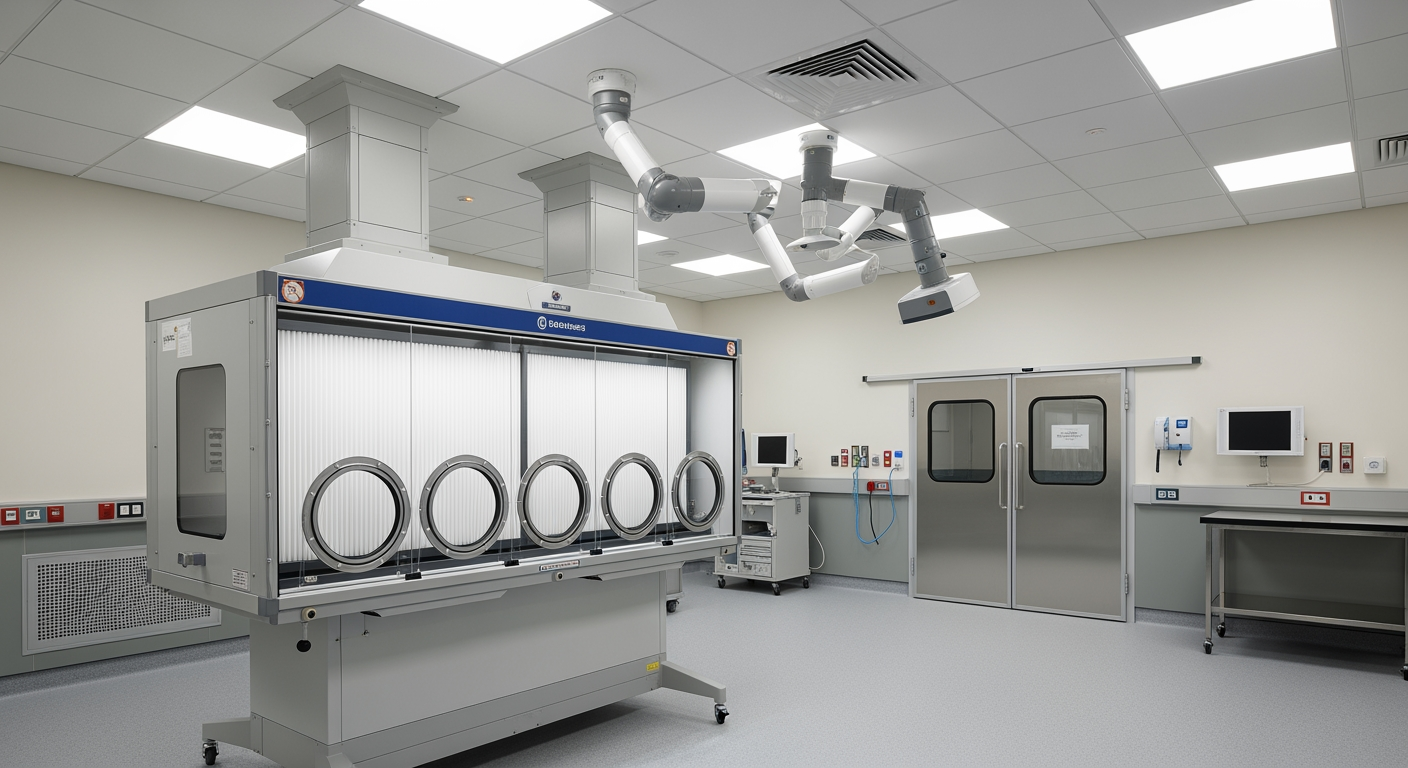
- Ventilation is Clinical Infrastructure: Airborne transmission and aerosol spread fundamentally changed how healthcare facilities view HVAC systems. Ventilation is no longer a comfort and building maintenance function; it is clinical infrastructure with direct patient safety implications. Facilities are upgrading to higher air change rates, installing HEPA filtration, and designing isolation capacity as a permanent operational feature.
- Surge Capacity Requires Flexibility, Not Just Capacity: Having 500 additional ICU beds available in a facility does not help if you cannot staff them, supply them, or operate them safely. Real surge capacity requires: staffing models that can flex (cross-training, rapid recruitment capabilities), supply chains with redundancy and buffer stock, infection control protocols that work at scale, and physical spaces that can be rapidly converted without compromising patient safety.
- Supply Chain Resilience is Non-Negotiable: Just-in-time supply chains that were efficient in normal times became vulnerability vectors during surge. Healthcare systems are now maintaining higher baseline inventories of critical supplies, developing supplier redundancy (so single-source suppliers don’t create bottlenecks), and building relationships with multiple manufacturers.
- Infection Prevention Protocols Scale Better When Designed for Scaling: Protocols improvised during crisis are labor-intensive and error-prone. Facilities that designed infection control procedures assuming they might need to implement them at 5x normal scale had better outcomes. This means: automating what can be automated, using technology to support (not replace) staff judgment, and training staff on decision-making logic rather than just checklist procedures.
ASHRAE 241 Control of Infectious Aerosols Standard and Ventilation Upgrades
In 2024, the American Society of Heating, Refrigerating and Air-Conditioning Engineers (ASHRAE) published Standard 241, Control of Infectious Aerosols, the first comprehensive guidance on ventilation system design and operation specifically for managing airborne infectious disease transmission. This standard is rapidly becoming the reference for healthcare facility ventilation and is driving widespread retrofit and upgrade projects in 2026.
Key Provisions of ASHRAE 241 for Healthcare Facilities:
- Air Changes Per Hour (ACH) and Filtration Requirements: ASHRAE 241 specifies minimum outdoor air intake rates and total air changes depending on room function and respiratory status of occupants. For example: general patient care areas should have at least 6 ACH with 40% outdoor air; suspected or confirmed infectious disease isolation rooms should have 12+ ACH with 100% air exhausted to the exterior (not recirculated). Filtration must be MERV-13 minimum for general areas, HEPA for isolation rooms.
- Isolation Room Negative Pressure and Monitored Exhaust: Isolation rooms caring for patients with suspected or confirmed airborne disease must maintain negative pressure relative to adjacent spaces (so air flows into the isolation room rather than out). This requires dedicated exhaust ducting that cannot be shared with other areas, exhaust filtered to HEPA standard, and pressure monitoring with alarms if negative pressure is lost.
- Flexible Isolation Capacity: ASHRAE 241 acknowledges that facilities cannot build enough permanent isolation rooms for pandemic surge. Instead, it specifies how temporary isolation areas (modified standard patient rooms with portable HEPA units and dedicated exhaust) can be configured to achieve isolation-room-equivalent safety during surge. This allows facilities to maintain baseline isolation capacity while having protocols to rapidly expand capacity.
- Verification and Monitoring: ASHRAE 241 requires that isolation room performance (pressure differential, air changes, filtration) be regularly verified through commissioning and periodically tested during operation. This is a shift from “once installed, assumed to work” to “continuous performance verification.”
Implementation for Healthcare Facilities in 2026:
Most healthcare facilities built before 2010 have HVAC systems that do not meet ASHRAE 241 standards. Retrofit to full compliance is expensive and time-consuming. Realistic implementation follows a phased approach:
Phase 1 (Immediate, 2026): Identify and upgrade baseline isolation capacity. Hospitals typically have 2-4 dedicated isolation rooms (built pre-COVID or for immunocompromised patients). Retrofit these rooms to full ASHRAE 241 specification: upgrade to 12+ ACH, ensure 100% exhaust (not recirculated), add HEPA filtration, install pressure monitoring with alarms, and verify performance through commissioning. This phase establishes that the facility has at minimum a credible baseline isolation capability.
Phase 2 (2026-2027): Establish surge isolation protocol using ASHRAE 241 flexible isolation guidance. Identify 10-20 additional patient rooms that can be rapidly converted to isolation capability during surge. Install portable HEPA filtration and dedicated exhaust ducting in these rooms, or ensure they can be retrofitted quickly. Develop and test protocols to activate surge isolation capacity, including staff training and supply positioning.
Phase 3 (2027-2028): Upgrade general ventilation systems to higher minimum outdoor air and air change rates. This is the most capital-intensive phase, potentially requiring HVAC upgrades across the facility. However, these upgrades provide ancillary benefits: improved energy efficiency through better controls, better temperature and humidity management, improved air quality that benefits occupants even in non-pandemic times.
Updated Surge Capacity Planning: Realistic Scenarios and Operational Constraints
Pre-COVID pandemic plans often assumed facilities could surge capacity by 50-100% during a crisis. Reality proved this was unrealistic. Facilities that attempted surge beyond 30-40% encountered critical constraints: ICU nurses trained in acute care could not be rapidly repurposed to pandemic surge units; ventilators and other equipment became bottlenecks; pharmacy and laboratory functions could not process volume at increased rates; security and housekeeping staffing created bottlenecks in patient admission and discharge.
Updated surge capacity planning in 2026 takes a more realistic approach:
Realistic Maximum Surge by Function: Rather than assuming uniform 50% surge across the entire hospital, facilities now model surge capacity by individual functions. Example from a 300-bed hospital: ICU surge capacity estimated at 50% (150 beds to 225); medical-surgical bed surge at 30% (120 beds to 156); ED capacity surge at 40%; operating room utilization at 20% (moving elective surgeries off-service); outpatient services at 10% (converting outpatient volumes to telehealth or deferral); specialty services (cardiology catheterization, imaging) at minimal surge due to equipment constraints.
Staffing Model Flexibility: Real surge capacity requires able to scale workforce. This involves: cross-training staff across unit types (e.g., medical-surgical nurses capable of providing basic ICU care during surge), establishing rapid recruitment and credentialing processes for temporary staffing, developing surge protocols that allow experienced clinicians to supervise less-experienced staff, and pre-establishing agreements with travel nursing agencies and retired-but-available-during-surge clinicians.
Supply Chain and Equipment Bottlenecks: Facilities maintain equipment inventories based on baseline capacity plus a surge buffer. For example, if the facility has 50 ventilators to support 25 ICU beds (with 1:1 backup), then planning for 50% ICU surge would require 80-100 ventilators available (including equipment from sister facilities or state emergency caches). Same logic applies to medications, IV supplies, monitoring equipment, and PPE. Realistic supply planning means maintaining buffer stock of critical items, even if it increases inventory costs.
Laboratory, Pharmacy, and Diagnostic Bottleneck Planning: These supporting functions often become capacity constraints before clinical unit capacity. Surge capacity planning must include: testing algorithms and point-of-care testing to reduce laboratory volume; pharmacy workflow optimization and temporary medication shortage protocols; imaging protocols adjusted for pandemic (fewer unnecessary scans, prioritization algorithms). These supporting functions should be explicitly included in surge planning meetings, not assumed to simply scale.
Infection Control and ICRA Protocols During Pandemic Construction
A critical lessons-learned from COVID-19 was that infection control risk assessment (ICRA) became essential during facility operations and construction. Earlier standards assumed construction projects could be managed with infection control protocols deferred until after completion. Pandemic operations made clear that ongoing construction during patient care (or particularly during pandemic surge) creates infection control risks that must be actively managed.
ICRA protocols during pandemic construction involve:
- Construction Zone Isolation: All construction must occur in areas with physical separation from active patient care. This may require temporary barriers, negative pressure enclosures around construction zones, dedicated air handling, and controlled entry/exit with hand hygiene and air shower mechanisms. If construction cannot be adequately isolated, it should be deferred during active pandemic operations.
- Dust and Particulate Control: Construction generates dust that can circulate through building systems and compromise air quality in patient care areas. During pandemic operations, additional filtration, HEPA vacuuming, and damp-dust cleaning protocols become essential. Pre-pandemic standards were often insufficient for pandemic conditions.
- Ventilation System Impacts: Construction may temporarily disrupt normal ventilation systems. ICRA protocols must include assessment of potential impacts to isolation room performance, general ventilation adequacy, and pressure relationships. Construction sequencing must account for infection control requirements.
- Staffing and Decontamination: Construction worker traffic through healthcare facilities during pandemic surge creates contamination risk. Protocols must include: designated entry/exit points with hand hygiene, dressing/undressing areas for PPE changes, protocols for construction workers to avoid areas with confirmed or suspected infections, and decontamination of shared tools and spaces.
The practical implication: facilities should avoid elective construction during active pandemic operations. If critical maintenance or modifications cannot be deferred, they must be managed through explicit ICRA protocols, which adds time and cost.
FAQ: Pandemic Preparedness and Surge Capacity in 2026
A: No. ASHRAE 241 recognizes that permanent isolation rooms for worst-case surge would be economically infeasible. Instead, facilities should maintain baseline isolation capacity (upgraded to ASHRAE 241 standards) and have documented protocols to rapidly establish temporary isolation using flexible design approaches. This means identifying patient rooms that can be converted to isolation, installing equipment and ducting that supports conversion, and training staff on activation procedures. This allows facilities to achieve necessary isolation capacity during surge without maintaining excessive underutilized space during baseline operations.
A: ASHRAE 241 provides the technical standard. However, implementation should be prioritized: isolation rooms first (where infectious patients are concentrated), then high-risk care areas (ICU, ED), then general patient care areas. A realistic timeline phases ventilation upgrades over 3-5 years, starting with isolation capacity and escalating based on ongoing assessment. Facilities can achieve meaningful pandemic readiness without upgrading every space to maximum specification.
A: Most facilities can realistically surge 30-40% total bed capacity by managing specific constraints (deferring elective surgery, converting outpatient capacity to inpatient, cross-training staff). Surging beyond 40% encounters significant operational friction: staffing becomes severely constrained, supply chains strain, laboratory and pharmacy bottlenecks emerge, and quality of care begins to degrade. Pandemic planning should assume 30-40% realistic maximum surge and focus on protocols to manage that level effectively rather than planning for surge levels that cannot be operationally achieved.
A: Yes, but with realistic targeting. Maintaining 6-12 month stockpile of critical supplies (ventilators, oxygen delivery equipment, certain medications) is reasonable. Maintaining 1-2 year stockpiles of consumables like PPE is less practical (shelf life limitations, storage costs, space constraints). Better approach: maintain strategic buffer stock of critical items, establish supplier relationships with redundancy (so not dependent on single sources), develop surge procurement contracts with known vendors, and participate in state emergency response caches that can be mobilized during crises.
Conclusion: Pandemic Preparedness as Permanent Operational Capability
The shift from pre-pandemic “crisis response planning” to 2026-era “permanent operational preparedness” represents a fundamental maturation in healthcare facility design and operations. Healthcare facilities implementing ASHRAE 241 ventilation standards, developing realistic surge capacity protocols, and embedding infection control into construction and maintenance planning will be measurably better positioned for the inevitable future pandemic than facilities treating pandemic preparedness as a compliance checkbox.
The investment is substantial—capital for ventilation upgrades, operational complexity for surge protocols, and ongoing staffing and supply chain management. However, the alternative—experiencing a pandemic without adequate infrastructure and protocols—creates far greater costs in terms of patient mortality, staff infection, facility dysfunction, and regulatory liability. For healthcare facilities in 2026, pandemic preparedness is not discretionary crisis planning; it is embedded infrastructure and operational excellence.