What barriers are required for ICRA Class III construction?
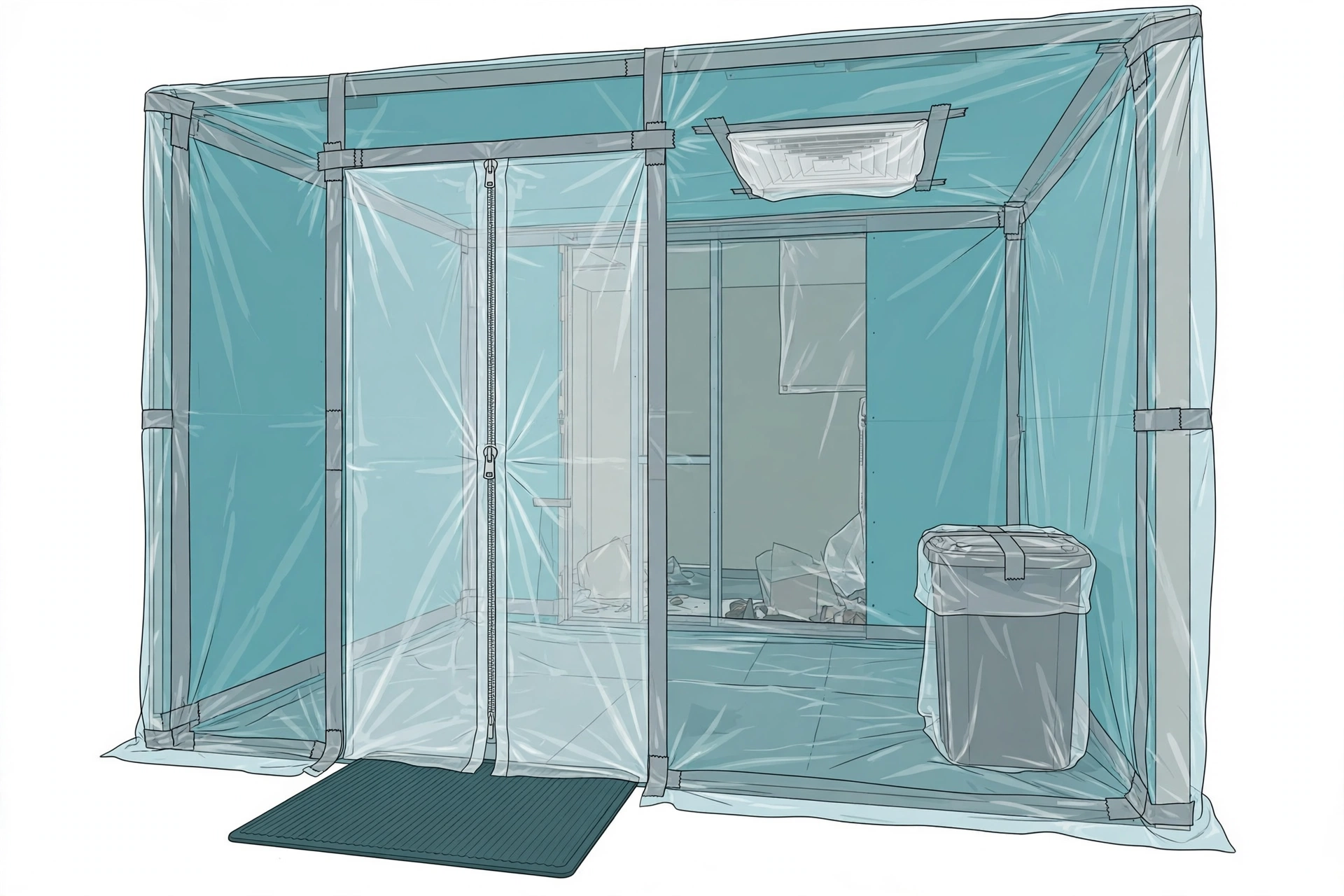
Class III construction requires critical barriers completed before work begins — sealed plastic or hard-wall partitions that fully isolate the work area — plus HVAC isolation, sealed penetrations, negative air pressure with HEPA filtration where the assessment calls for it, contained waste transport, and an infection control permit issued before construction starts. Barriers stay up until the project is inspected by Safety and Epidemiology and thoroughly cleaned.
The Class III barrier package
- Critical barriers (plastic or hard) built to prevent dust release, completed before construction begins.
- HVAC isolation: isolate the system in the work area; seal supply and return diffusers to prevent duct contamination and positive pressurization.
- Sealed penetrations: holes, pipes, conduits sealed appropriately (UL-listed firestop where the barrier is rated).
- Negative pressure: maintain with HEPA-equipped air filtration units where required by the assessment (note: Class III areas that can’t be fully sealed should be elevated to Class IV negative-air requirements).
- Waste containment: construction waste contained before and during transport in tightly covered containers.
- Dust mats at entrance/exit, replaced as needed.
Where Class III sits in the matrix
Class III applies to Type C (large-scale, longer duration) work in medium-risk areas, Type B work in high-risk areas, Type D work in low-risk areas, and Type A work in the highest-risk group. An infection control permit and approval are required for Class III (Type C) and all Class IV/V work.
Closeout
After work: remove barrier materials carefully to minimize spreading debris, HEPA-vacuum, wet mop with disinfectant, remove HVAC isolation — and only after inspection and cleaning. The barriers come down last, not first.
Barriers first up, last down.
FAQ
Can Class III barriers be plastic sheeting?
Yes — plastic or hard barriers are acceptable, provided they’re completed before work begins and sealed against dust release. Projects over two weeks require hard barriers.
Does Class III require negative pressure?
Where the assessment requires it — and Class III areas that can’t be fully sealed should be elevated to Class IV negative-air requirements.
When can Class III barriers come down?
Only after the project is inspected by Safety and Epidemiology departments and thoroughly cleaned.