What is NFPA 101 Life Safety Code for healthcare occupancies?
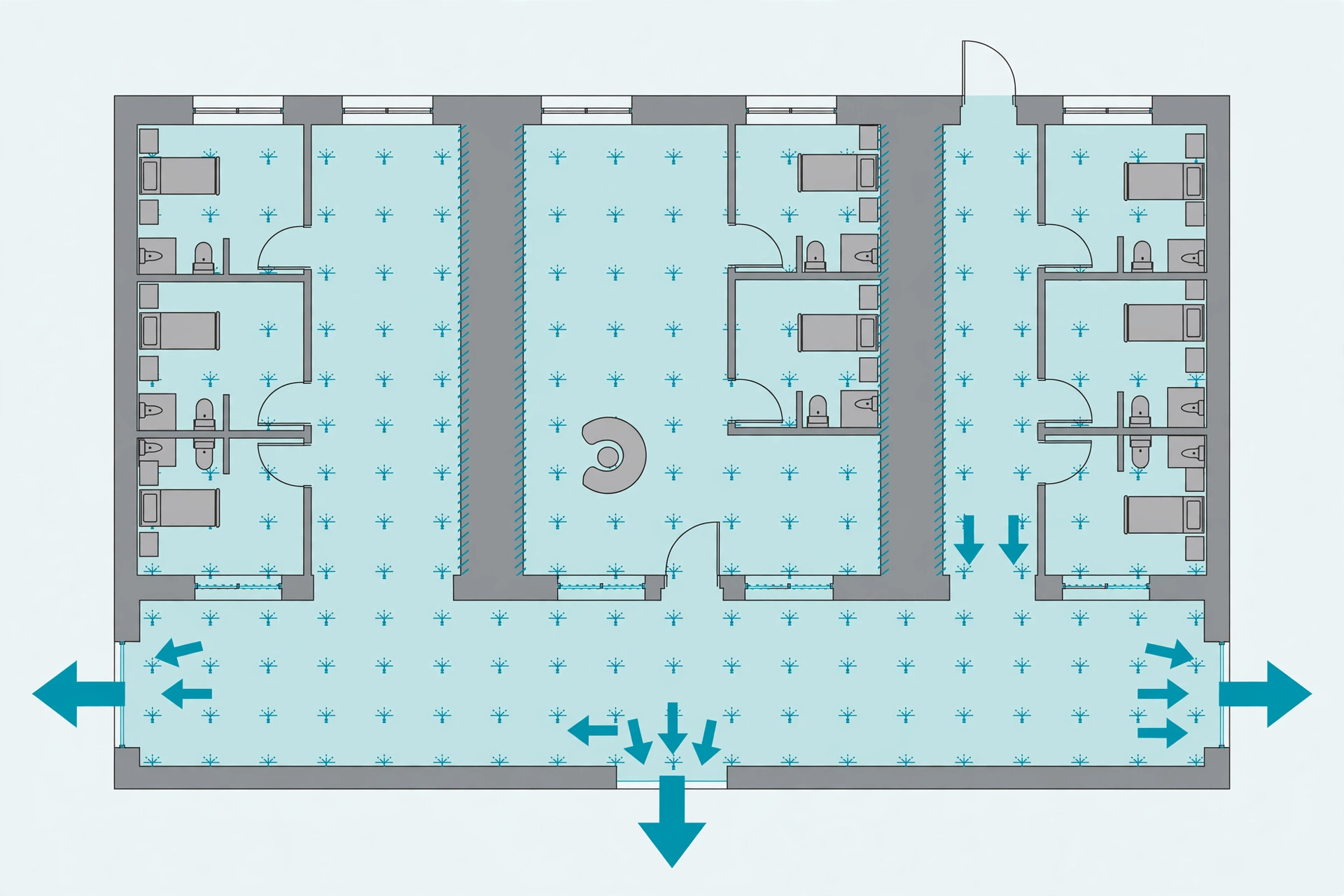
NFPA 101, the Life Safety Code, is the National Fire Protection Association’s model code for protecting building occupants from fire, smoke, and toxic fumes. For healthcare occupancies (Chapters 18 for new, 19 for existing), it sets requirements for compartmentation, egress, fire protection systems, and interior finishes — all built around one reality: hospital patients mostly can’t evacuate themselves, so the code emphasizes defending them in place rather than moving them.
What it requires of healthcare occupancies
- Smoke compartments: each floor divided into at least two smoke compartments so patients can be moved horizontally past a smoke barrier instead of down stairs.
- Corridor widths: 8 ft clear in new healthcare occupancies (6 ft in existing) to move beds and equipment.
- Fire protection: automatic sprinklers, fire alarm and detection, with specific provisions for healthcare.
- Egress: multiple remote exits; a single enclosed exit stair is never permitted in a healthcare occupancy.
- Interior finishes: flame-spread and smoke-developed limits appropriate to the occupancy.
Who enforces it
NFPA 101 is a model code — it has force when adopted. For Medicare/Medicaid-participating facilities, CMS enforces the 2012 edition (adopted 2016), and The Joint Commission surveys to it as well. States and local AHJs may adopt different editions, so always confirm which edition your authority enforces.
The code assumes patients can’t run — so the building does the protecting.
See which NFPA 101 edition CMS enforces and the defend-in-place strategy.
FAQ
What is NFPA 101?
The National Fire Protection Association’s Life Safety Code — the model code for protecting building occupants from fire and smoke.
Which NFPA 101 chapters cover hospitals?
Chapter 18 (new healthcare occupancies) and Chapter 19 (existing healthcare occupancies).
Is NFPA 101 law?
It’s a model code — it becomes enforceable when adopted by an authority like CMS, a state, or a local AHJ.