How do hospitals balance facility costs with patient experience goals?
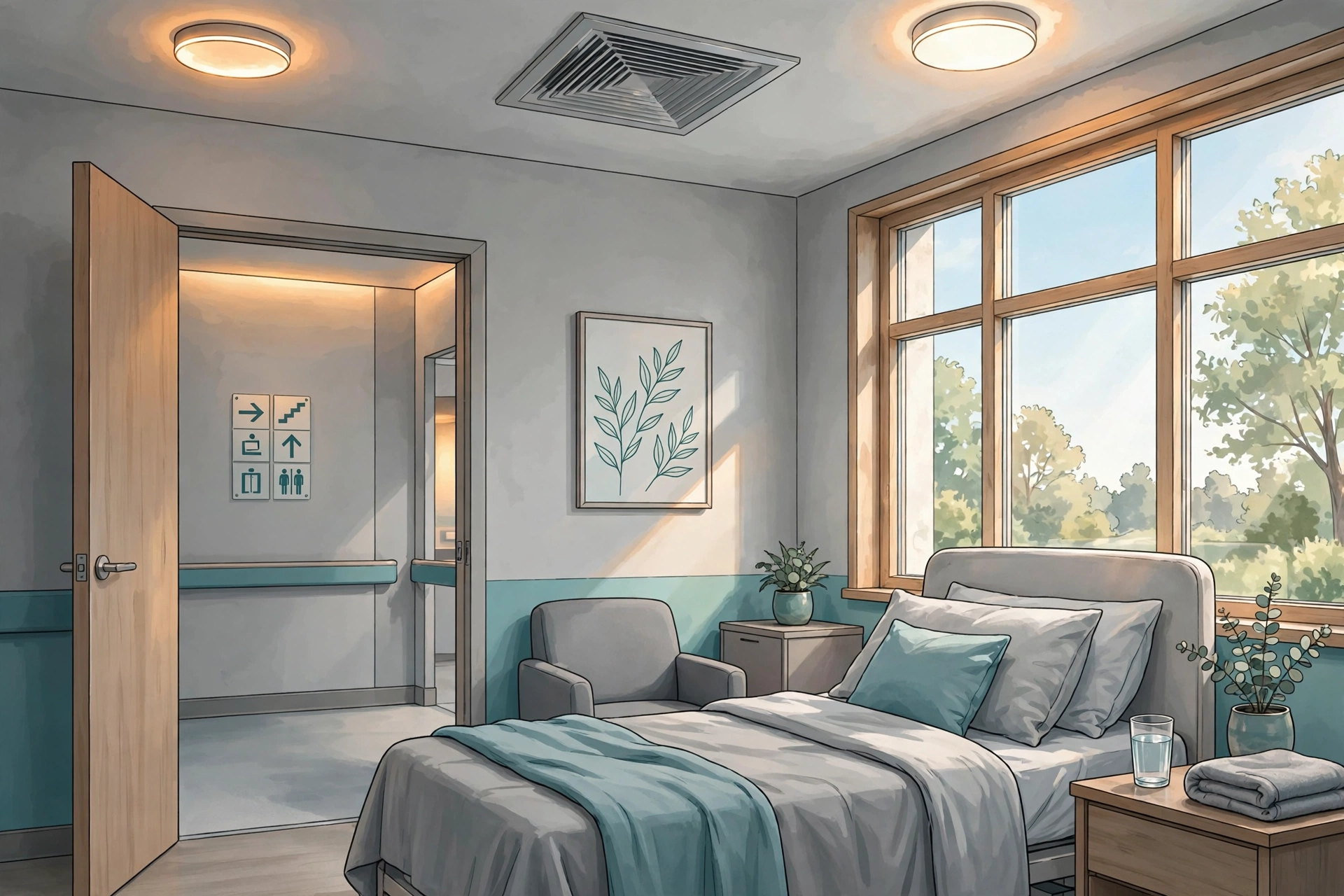
Hospitals balance cost and experience by treating the physical environment as clinical infrastructure: the evidence is strong that noise, lighting, thermal comfort, and wayfinding affect outcomes (sleep, delirium, falls, satisfaction scores that drive reimbursement). The practical balance: invest where environment touches outcomes — quiet HVAC in patient rooms, circadian lighting, clear wayfinding — and drive efficiency where patients never see it — central plants, controls optimization, procurement. Cut the back-of-house; protect the bedside.
Where to spend
- Acoustics: quiet HVAC and sound masking in patient rooms — sleep quality is an outcome and a satisfaction driver.
- Lighting: circadian-supportive lighting reduces delirium risk and improves staff alertness.
- Thermal comfort: responsive room-level control; nothing erodes satisfaction like a room that’s always wrong.
- Wayfinding: clear signage and intuitive circulation reduce stress for patients and families — and staff interruptions.
Where to save
Central plant efficiency, building automation optimization, strategic energy procurement, and preventive maintenance that avoids premium emergency repairs. None of these touch the patient — all of them fund the things that do.
Cut the back-of-house. Protect the bedside.
See operational efficiency and facility performance metrics.
FAQ
Does the hospital environment affect patient outcomes?
Yes — noise, lighting, thermal comfort, and wayfinding are linked to sleep, delirium, falls, and satisfaction scores.
Where should hospitals cut facility costs?
In invisible systems: central plants, controls, procurement, preventive maintenance — not in the patient environment.
How does facility spending connect to reimbursement?
Patient satisfaction scores (HCAHPS) influenced by the environment feed into value-based reimbursement.