What metrics are most important for measuring healthcare facility performance?
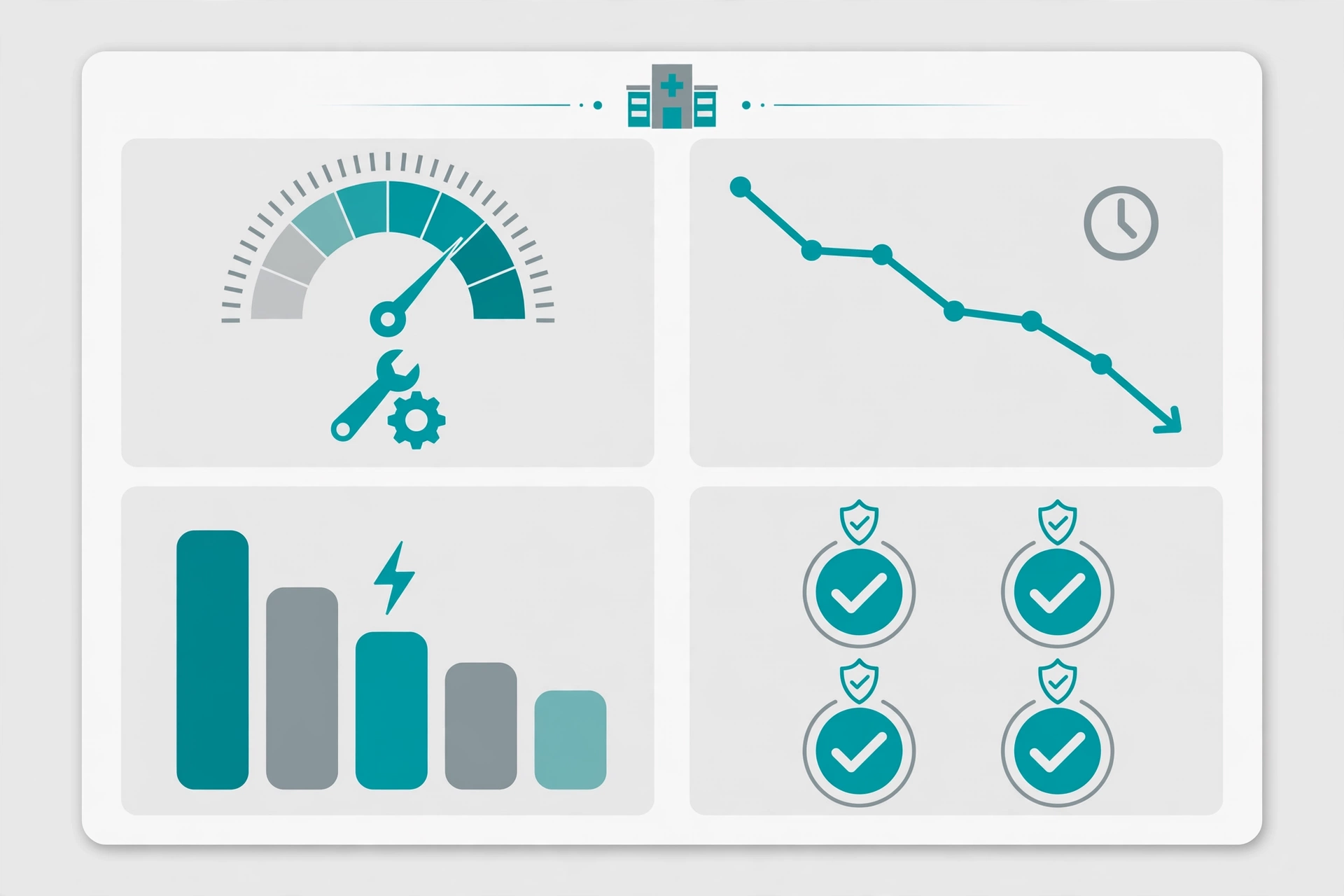
The metrics that matter fall into four buckets: reliability (PM completion rate, unplanned downtime hours, emergency-to-planned work ratio), compliance (life-safety testing completion, ILSM/ICRA documentation currency, survey findings), cost (energy use intensity, maintenance cost per square foot, deferred maintenance backlog), and service (work-order response and completion times, customer satisfaction). If a metric doesn’t drive a decision in one of these buckets, it’s decoration.
The core dashboard
- PM completion rate: % of scheduled preventive tasks completed on time — the single best predictor of future failures.
- Unplanned downtime: hours of clinical-impacting outages; trending down is the goal.
- Emergency work ratio: % of work that’s reactive — high means the PM program is failing.
- Energy use intensity (EUI): kBtu/sq ft/year, benchmarked against peers.
- Deferred maintenance backlog: dollar value of needed-but-unfunded work; growing is a red flag.
- Compliance currency: % of required testing and documentation current — should be 100%, always.
- Response times: from request to acknowledgement to completion, by priority.
Measure what you’d change. Delete the rest.
FAQ
What is the most important facility metric?
PM completion rate — the best predictor of future failures and downtime.
How do hospitals benchmark energy performance?
Energy use intensity (kBtu per sq ft per year), compared against peer facilities.
What is a healthy emergency work ratio?
As low as possible — a high reactive share means preventive maintenance is failing.