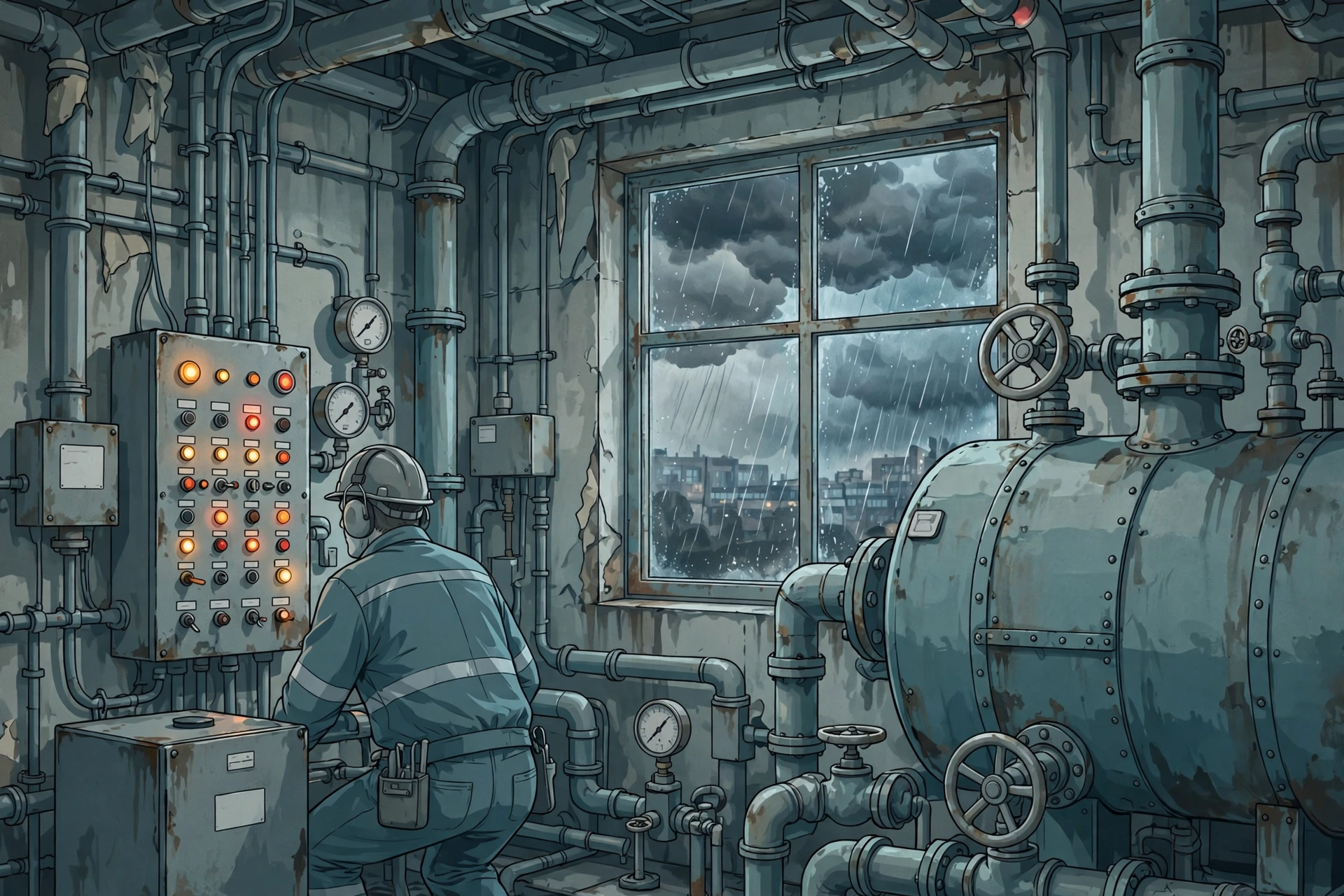
What are the biggest operational challenges facing hospitals and medical facilities today?
The biggest operational challenges in 2026: (1) the skilled-trades workforce shortage — retiring technicians with no pipeline behind them; (2) aging infrastructure — the average US hospital is decades old with compounding deferred maintenance; (3) energy cost and decarbonization pressure; (4) regulatory complexity — overlapping Joint Commission, CMS, state, and local requirements; (5) cyber-physical risk — building automation systems as attack surfaces; and (6) capital scarcity — every facilities dollar competing with clinical investment and thin margins.
Take this to the job site.
This article as a one-page field sheet – the direct answer, the key numbers, and the checklist. Free PDF, prints clean, works offline.
Why these six compound
They reinforce each other: aging buildings need more maintenance exactly as the workforce shrinks; decarbonization demands capital that margins don’t provide; cyber risk grows as systems get “smarter” with fewer people watching them. Facilities leaders who treat these as separate problems lose — the winners build integrated strategies (e.g., automation that both cuts energy and compensates for staffing gaps).
Old buildings, fewer hands, more rules, less money. That’s the job.
See 2026 trends and preparing for disruptions.
FAQ
The operator-level response to each challenge
The challenges are well known; what separates facility teams is the response discipline:
- Aging infrastructure: answer with condition data, not age. A scored facility condition assessment turns “everything is old” into a sequenced, fundable list — and keeps a single failure from reordering the whole capital plan.
- Workforce: the retiring-technician wave is a knowledge problem before it is a headcount problem. Documented rounds, photographed valve and damper locations, and apprentice pairing capture what walks out the door.
- Compliance load: CMS, Joint Commission, NFPA, and ASHRAE demands land on the same small team. A single compliance calendar with named owners — the pattern in the regulatory compliance guide — beats four binders that disagree.
- Capital constraints: phased fixes sequenced by risk (life safety, then clinical continuity, then efficiency) let a constrained budget still retire the worst exposures first.
None of these responses requires new technology. All of them require the unglamorous asset this topic keeps returning to: current, honest information about the building.
What is the hardest facilities challenge for hospitals?
The skilled-trades workforce shortage — institutional knowledge retiring with no pipeline behind it.
How old is the average US hospital?
Decades — with compounding deferred maintenance backlogs that grow faster than funding.
Are hospital building systems cyber targets?
Yes — building automation and networked controls are attack surfaces that need the same security attention as IT.
What is the biggest operational challenge facing hospital facility teams today?
The compounding of aging infrastructure with a retiring workforce and a growing compliance load on flat budgets. The working response is condition-based capital sequencing, deliberate knowledge capture, and one compliance calendar with named owners.
Get the weekly brief
Surveys, water, plant and readiness — what we measured and what changed in facility operations, every week.