How do FGI Guidelines affect hospital renovation projects?
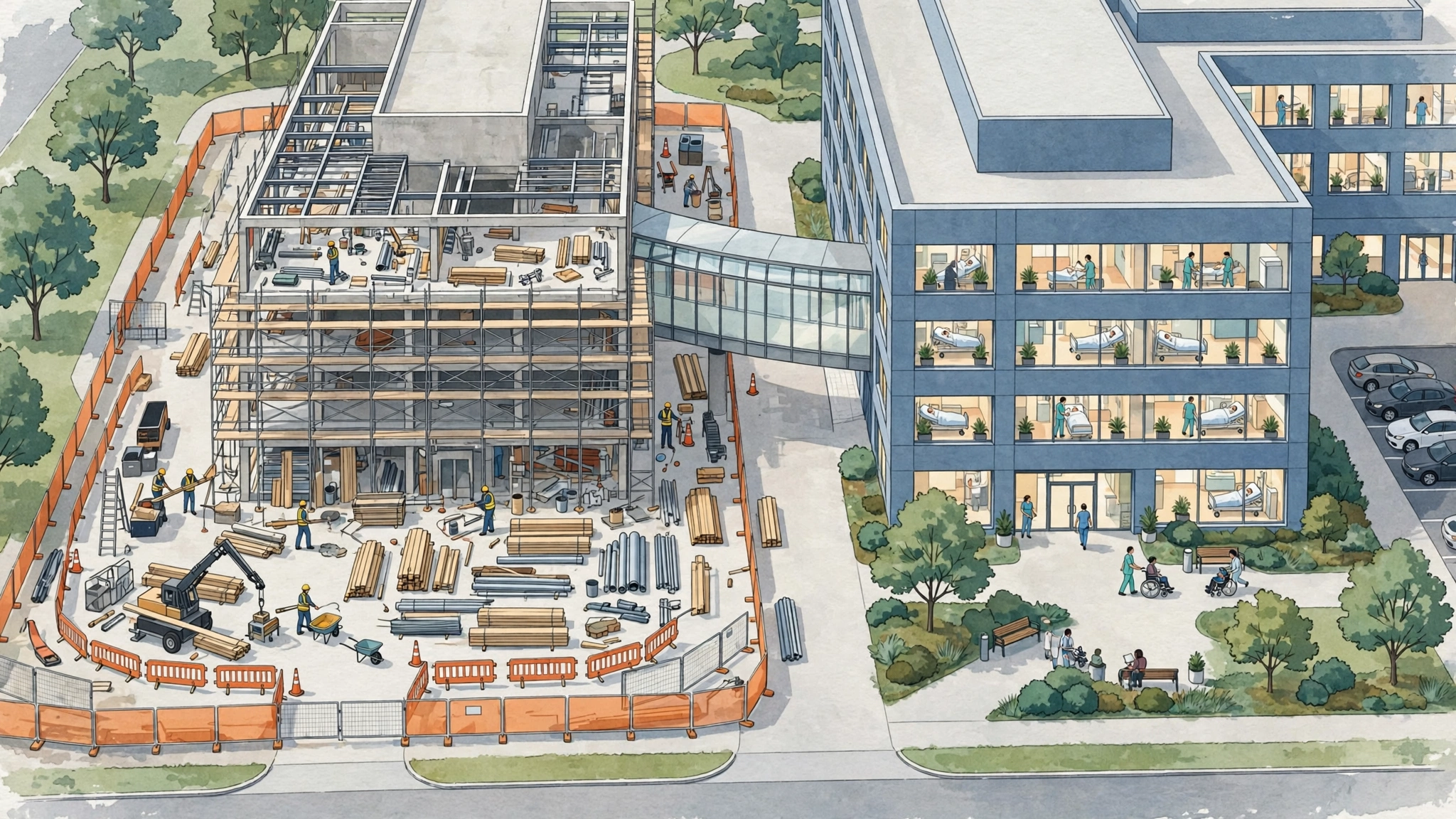
Where a state or local jurisdiction has adopted the FGI Guidelines, they must be followed for major renovation projects — not just new construction. That means altered, renovated, or repurposed space gets designed to the adopted edition’s requirements for that space type. Both The Joint Commission and DNV also expect accredited facilities to follow either the state-adopted edition or the most current FGI edition when planning new, altered, or renovated space.
What “major renovation” triggers
The trigger isn’t cosmetic refresh — it’s work that changes the function, configuration, or systems of a space: converting semi-private rooms to private, reconfiguring a unit, replacing HVAC serving clinical areas, or altering procedure rooms. When the trigger is hit, the renovated space must meet current FGI requirements for room sizes, clearances, handwashing, ventilation (via ASHRAE 170 as referenced), and other applicable provisions — even if the rest of the building predates them.
The phasing problem
Renovations in operating hospitals happen in phases, and FGI’s 2026 cycle specifically addressed phasing during renovations — recognizing that a unit under phased construction has unique compliance questions about which requirements apply when, and how partially complete work interacts with occupied adjacent areas. Your phasing plan should address FGI compliance phase by phase, not just at final completion.
Practical implications for project planning
- Budget impact: bringing altered space to current FGI standards (larger rooms, added handwashing stations, upgraded ventilation) can significantly exceed the “refresh” budget — scope it early.
- ICRA + ILSM coordination: renovation triggers infection control (ICRA) and life safety (ILSM) programs alongside FGI design compliance. Plan all three together.
- Edition lock: confirm which FGI edition the AHJ enforces before schematic design. Designing to 2026 when the state enforces 2018 (or vice versa) creates rework.
Renovation triggers three programs at once.
See ICRA and ILSM on renovation projects and the FGI 2026 compliance guide.
FAQ
Do FGI Guidelines apply to renovations or only new construction?
Where adopted, they apply to major renovations — altered, renovated, or repurposed space must meet the adopted edition’s requirements for that space type.
What counts as a “major renovation” under FGI?
Work changing a space’s function, configuration, or systems — not cosmetic refresh. The AHJ makes the final call on where the line falls.
Do accreditors require FGI compliance on renovations?
Yes — The Joint Commission and DNV expect accredited facilities to follow the state-adopted edition or the most current FGI edition for new, altered, or renovated space.