Do ILSM apply to small renovation projects in hospitals?
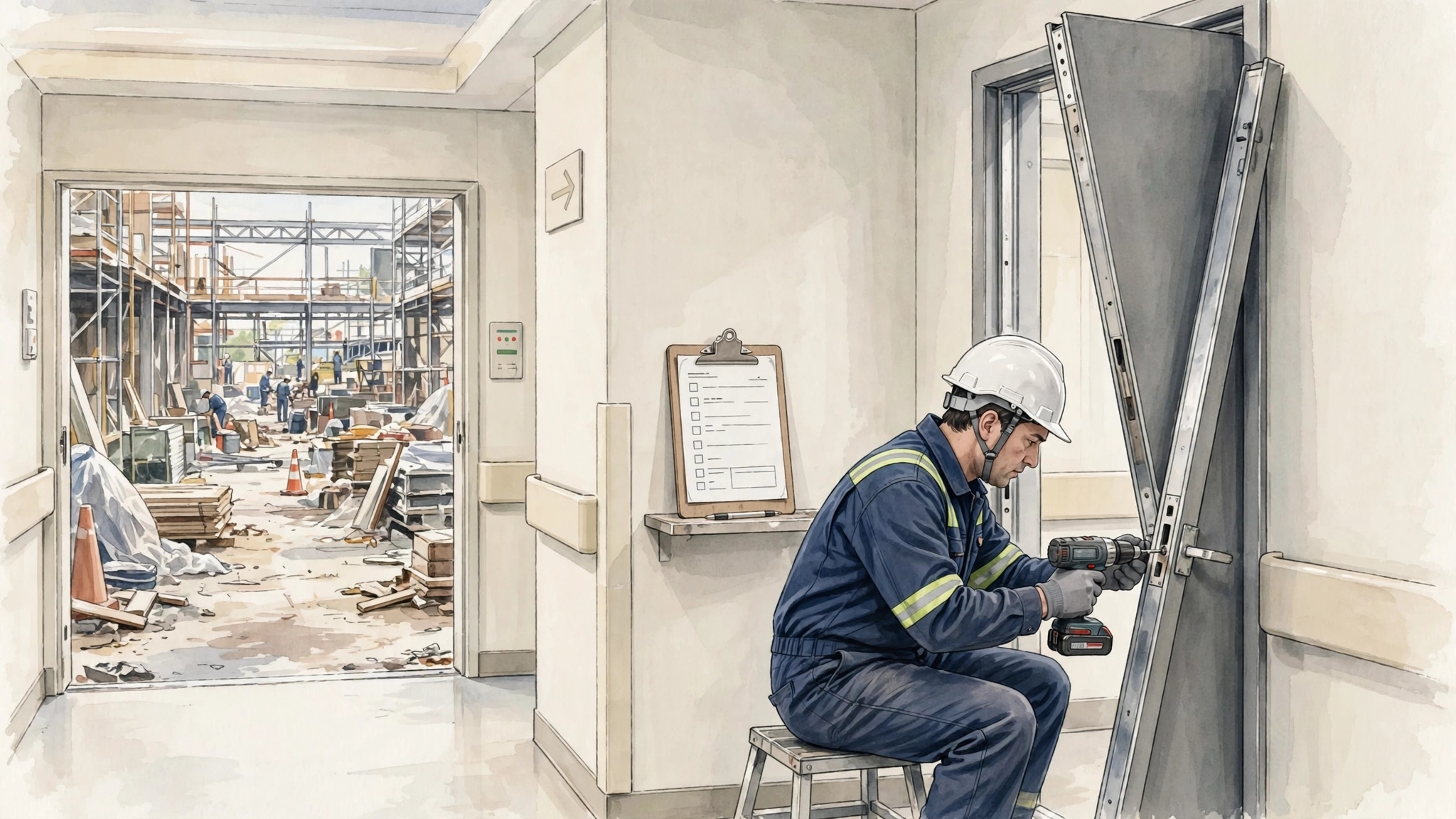
Yes — if the project affects life safety features. ILSM has no minimum project size, no dollar threshold, and no “too small to matter” exemption. A two-day project that takes a smoke barrier offline or blocks an egress path triggers the same assessment requirement as a six-month wing renovation. The only question the standard asks is whether fire and life safety protections are degraded.
What “small” projects trigger ILSM
- Replacing a smoke door or door hardware on a rated opening
- Above-ceiling work that penetrates a smoke or fire barrier
- Taking a sprinkler zone or detector loop offline for a tie-in
- Temporarily blocking a corridor for equipment staging
- Hot work (welding, cutting) in or near occupied areas
- Any work generating dust or debris in egress paths
Most of these are measured in hours, not weeks — and that’s exactly why they get missed. The project is so small nobody runs the ILSM assessment, and the surveyor finds the unsealed barrier penetration during EOC rounds.
Proportional response, not exemption
“Applies” doesn’t mean “all eleven measures for a four-hour job.” The ILSM assessment is case-by-case and proportional: a half-day barrier penetration might need only a documented assessment, a fire watch during the impairment, and verification of firestop restoration — not quarterly drills and organization-wide education. Small project, small ILSM footprint — but the assessment and documentation still exist.
The practical rule
Make the ILSM assessment part of every work order that touches ceilings, walls, doors, corridors, or fire systems — even the “quick” ones. A one-page assessment that concludes “no ILSM required, barriers unaffected, systems remain operational” takes five minutes and is fully defensible. No assessment at all is the deficiency.
Size doesn’t trigger ILSM. Degraded protection does.
See when ILSM is required during hospital construction and the ICRA/ILSM construction guide.
FAQ
Is there a minimum project size for ILSM?
No. There is no square-footage, dollar, or duration threshold in the standard.
Does a four-hour sprinkler impairment need ILSM?
It needs an assessment. At 4+ cumulative hours in 24 for alarm (10 for sprinkler), fire watch or evacuation enters the picture — so even short impairments need the documented determination.
What about after-hours maintenance work?
Same rules. Night-shift barrier work with no ILSM assessment is still a finding when the surveyor reviews the work-order history.