What does The Joint Commission look for during a life safety survey?
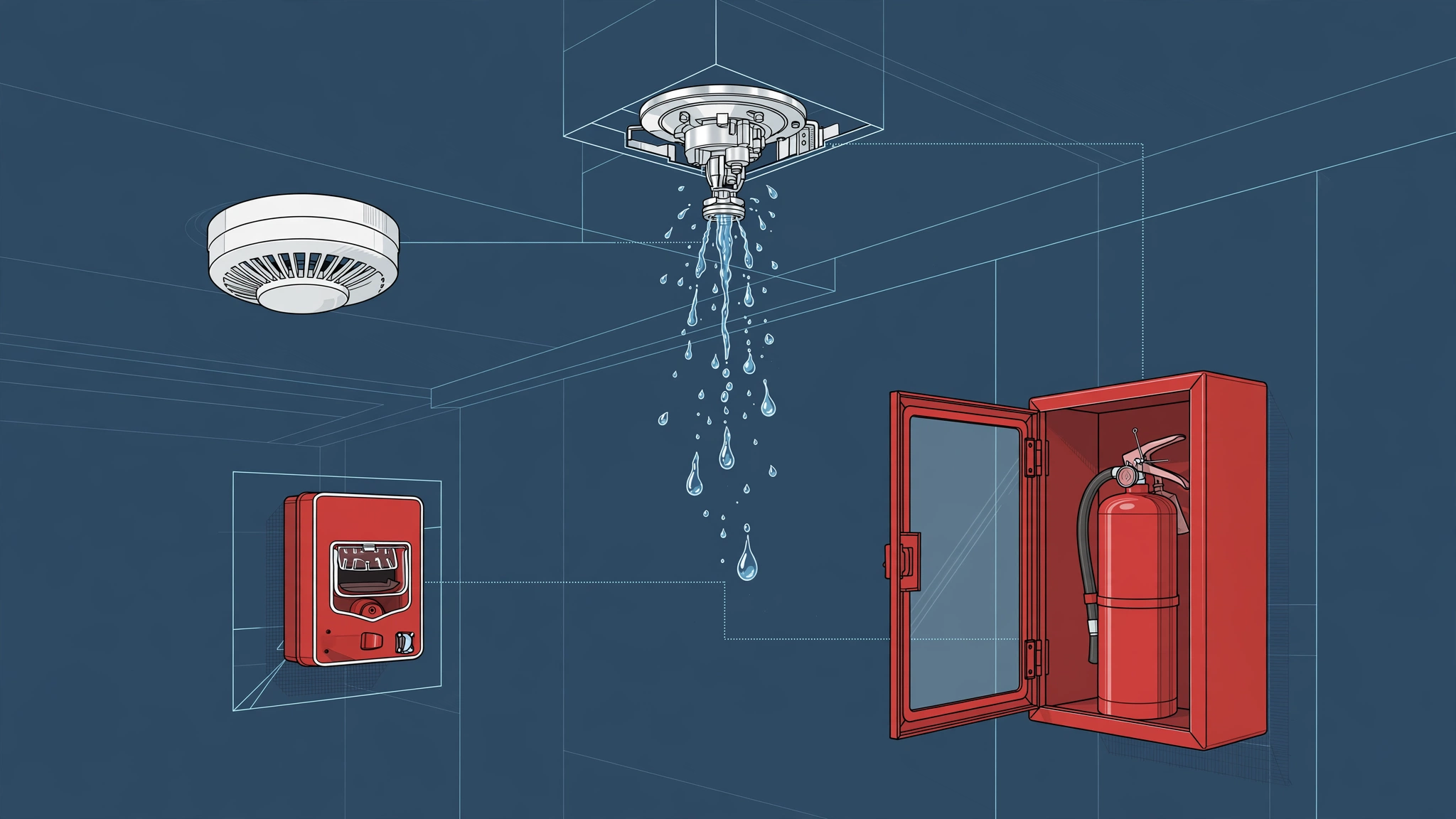
During a life safety survey, Joint Commission surveyors verify that the building’s fire and life safety protections actually work as designed: building and fire protection features are maintained, the Statement of Conditions is accurate, ILSM are in place where needed, and staff know what to do when the alarm sounds. They inspect, they test, and they interview — paper alone doesn’t pass.
The building assessment and Statement of Conditions
Surveyors start with your building’s documented life safety profile. Under LS.01.01.01, the organization must assess Life Safety Code compliance and maintain an accurate e-Statement of Conditions (e-SOC). Every Plan for Improvement (PFI) and Survey-Related Plan for Improvement (SPFI) in the e-SOC needs to be current, with realistic timeframes — an SPFI must meet the 60-day timeframe. A stale e-SOC is one of the fastest ways to start a survey badly.
What gets inspected and tested
Expect surveyors to physically verify:
- Means of egress — corridors, stairwells, and exit paths clear, properly lit, with compliant door hardware and latching
- Fire and smoke barriers — walls, doors, and dampers intact; penetrations properly firestopped
- Fire alarm and detection — panel status, device coverage, testing records
- Suppression systems — sprinklers unobstructed and inspected, standpipes and extinguishers in place and serviced
- Emergency power — generator testing logs, transfer switch operation
- Medical gas and vacuum systems — where applicable, with maintenance records
The interview test
Life safety surveyors interview facilities staff and clinical staff alike. “What do you do when the fire alarm activates?” must produce the RACE/PASS answer without hesitation. Staff in construction-adjacent areas must be able to describe the ILSM in effect. If the people can’t explain it, the program doesn’t exist as far as the survey is concerned.
Construction in the building
Any active construction gets its own line of questioning: ILSM assessment documentation, daily inspection logs, barrier integrity, and coordination with infection control (ICRA). Surveyors connect the life safety and infection control threads — your ICRA and ILSM programs should tell one consistent story.
Get the full 2026 picture.
Read Accreditation 360 and the 2026 physical environment standards, plus NFPA 101 for healthcare: egress, compartments, and smoke barriers.
FAQ
How is a life safety survey different from the EOC survey?
Under Accreditation 360 (effective 2026), both live in the restructured physical-environment evaluation. Life safety focuses on the building’s fire protection features and Code compliance; EOC covers the broader management of safety, security, hazmat, equipment, and utilities.
What is an SPFI and its timeframe?
A Survey-Related Plan for Improvement, entered in the e-SOC when a survey-related deficiency will be corrected through a plan. It must meet the 60-day timeframe.
Can surveyors test systems themselves?
They observe, ask staff to demonstrate, and review testing records. They don’t operate your fire alarm panel — but they’ll ask your tech to show them it’s monitored and functional.