How do you communicate construction risks to clinical staff?
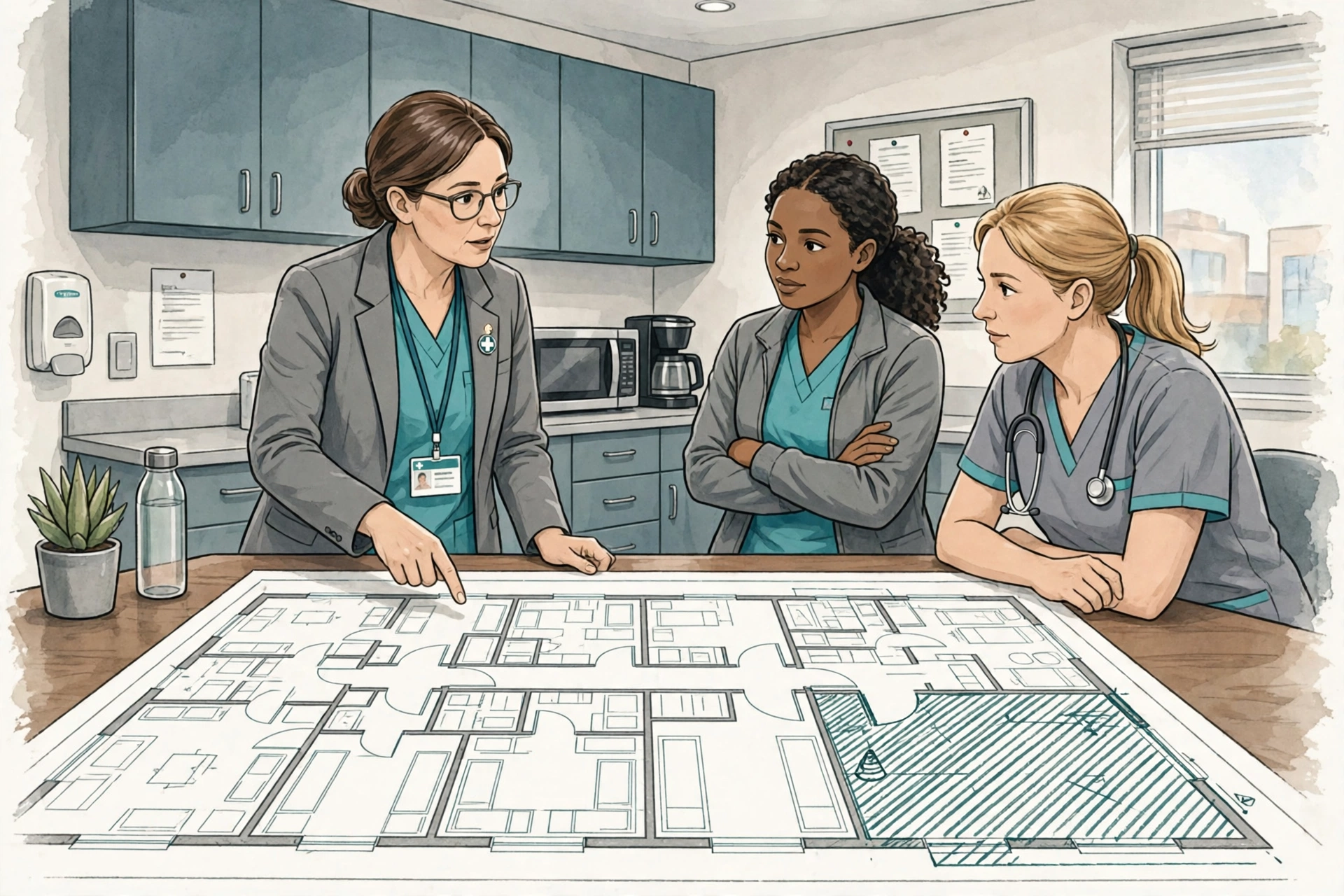
Communicate construction risks to clinical staff through pre-construction briefings on affected units, clear signage at work zones, regular updates as the project progresses, and a defined escalation chain for reporting breaches (dust in corridors, odd smells, water discoloration). The message must be clinical, not technical: nurses need to know what to watch for in their patients and who to call — not the manometer set point.
The communication plan
- Before work starts: unit-based briefings — what’s happening, how long, what protections are in place, what changes for the unit.
- What to watch for: dust migration, unusual odors, water issues, and in patients — persistent fever unresponsive to antibiotics (possible aspergillosis) during nearby construction.
- Who to call: a single named contact and backup for reporting concerns, with guaranteed response — not a general work-order queue.
- Ongoing: brief updates at project milestones; immediate notification of any breach, pressure loss, or water event.
- Signage: at every work zone boundary — what the area is, who’s authorized, and the reporting contact.
What not to do
Don’t bury the risk in a facilities memo nobody reads. Don’t use jargon (“we’re maintaining -0.01 inches water column”) with clinical staff — translate it (“we’re keeping construction air from reaching your unit, and here’s how you’ll know if that changes”). And never let staff learn about construction from the jackhammer.
Tell them what to watch for, and who to call. That’s the whole plan.
See the IP’s role and protecting immunocompromised patients.
FAQ
How should hospitals tell staff about construction risks?
Pre-construction unit briefings, clear work-zone signage, regular milestone updates, immediate breach notification, and a single named reporting contact.
What should clinical staff watch for during construction?
Dust migration, odors, water issues — and in patients, persistent antibiotic-unresponsive fever near construction (possible aspergillosis).
Who do staff call about a construction concern?
A single named contact (and backup) with guaranteed response — defined in the communication plan before work starts.