How do construction projects spread infections in hospitals?
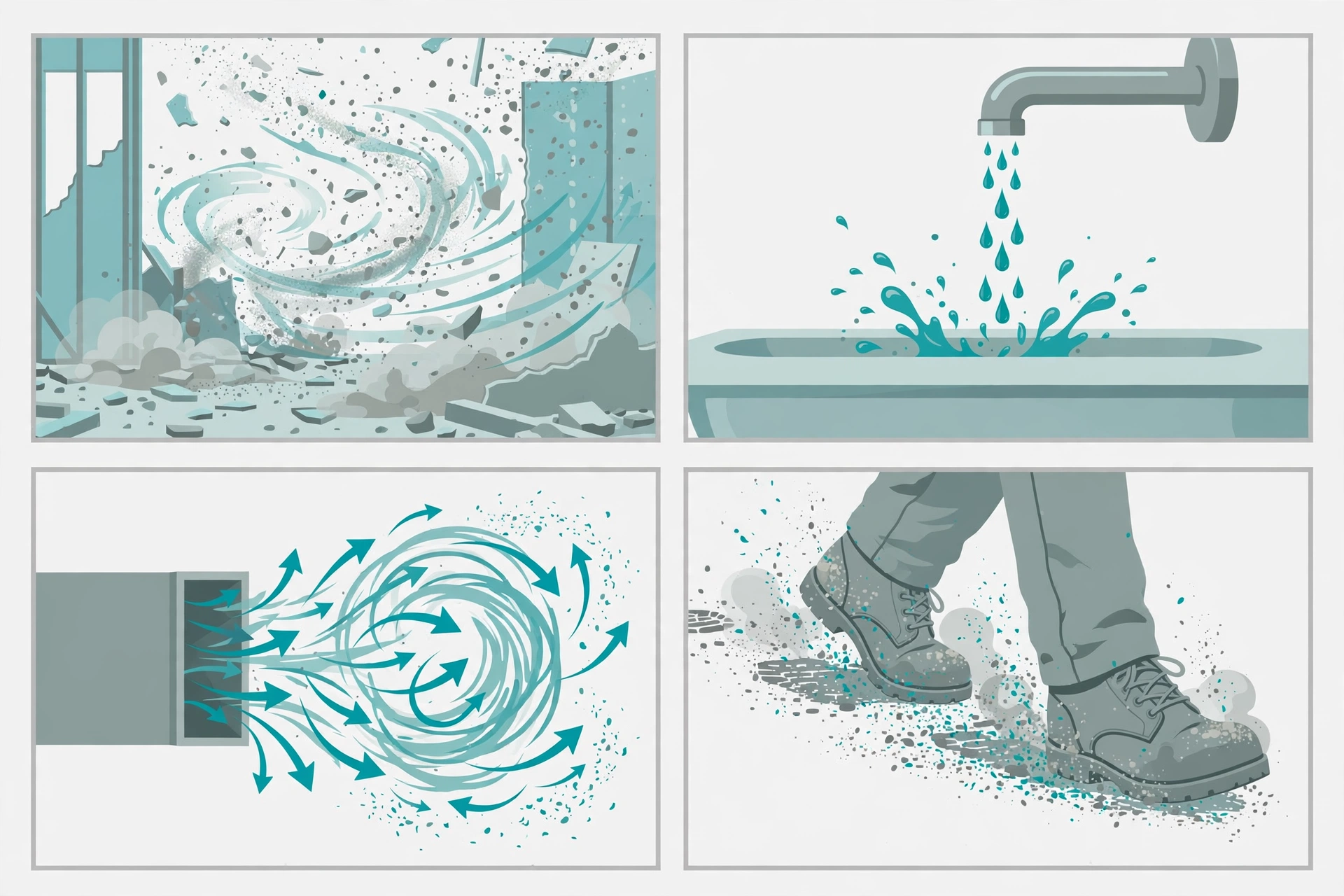
Construction spreads infections through four pathways: (1) airborne dust carrying Aspergillus spores released by demolition and renovation, inhaled by immunocompromised patients; (2) water system disruption — stagnation, pressure loss, and dead legs that let Legionella amplify; (3) HVAC disruption — altered pressure relationships that move contaminants between zones, and vibration that dislodges accumulated spores from old ductwork; and (4) traffic — workers, equipment, and waste moving pathogens through the facility on clothing, shoes, and carts.
The four pathways
- Airborne dust and spores: demolition aerosolizes Aspergillus and other molds ubiquitous in soil and building materials. Healthy lungs clear them; neutropenic patients can develop invasive, often fatal aspergillosis.
- Water: shutdowns, low flow, and tepid stagnant water in dead legs create Legionella amplification sites. When water service resumes, contaminated aerosols reach showers, faucets, and ice machines.
- HVAC disruption: construction can reverse pressure relationships, pushing dirty air into clean areas; vibration shakes loose decades of accumulated dust and spores from duct interiors.
- Movement: every worker, cart, and waste container crossing the barrier is a potential vector — hence anterooms, coveralls, shoe covers, and covered waste transport.
Why it matters
These aren’t theoretical risks — construction-associated aspergillosis outbreaks are well documented, with high mortality in the affected patient groups. Every ICRA precaution maps to one of these four pathways: barriers and negative pressure for air, flushing and temperature control for water, HVAC isolation for pressure relationships, anterooms and hygiene for movement.
Air, water, pressure, movement — control all four or control none.
See Aspergillus in hospital construction and water system risks.
FAQ
How does construction cause infections in hospitals?
Through airborne dust carrying Aspergillus spores, water system disruption amplifying Legionella, HVAC pressure disruption, and pathogen movement on workers and equipment.
What is the deadliest construction-related infection?
Invasive aspergillosis in immunocompromised patients — carried by construction dust, with high mortality.
Can construction affect hospital water safety?
Yes — shutdowns and stagnation let Legionella amplify; resumption of service can deliver contaminated aerosols to patients.