How do you protect immunocompromised patients during renovation?
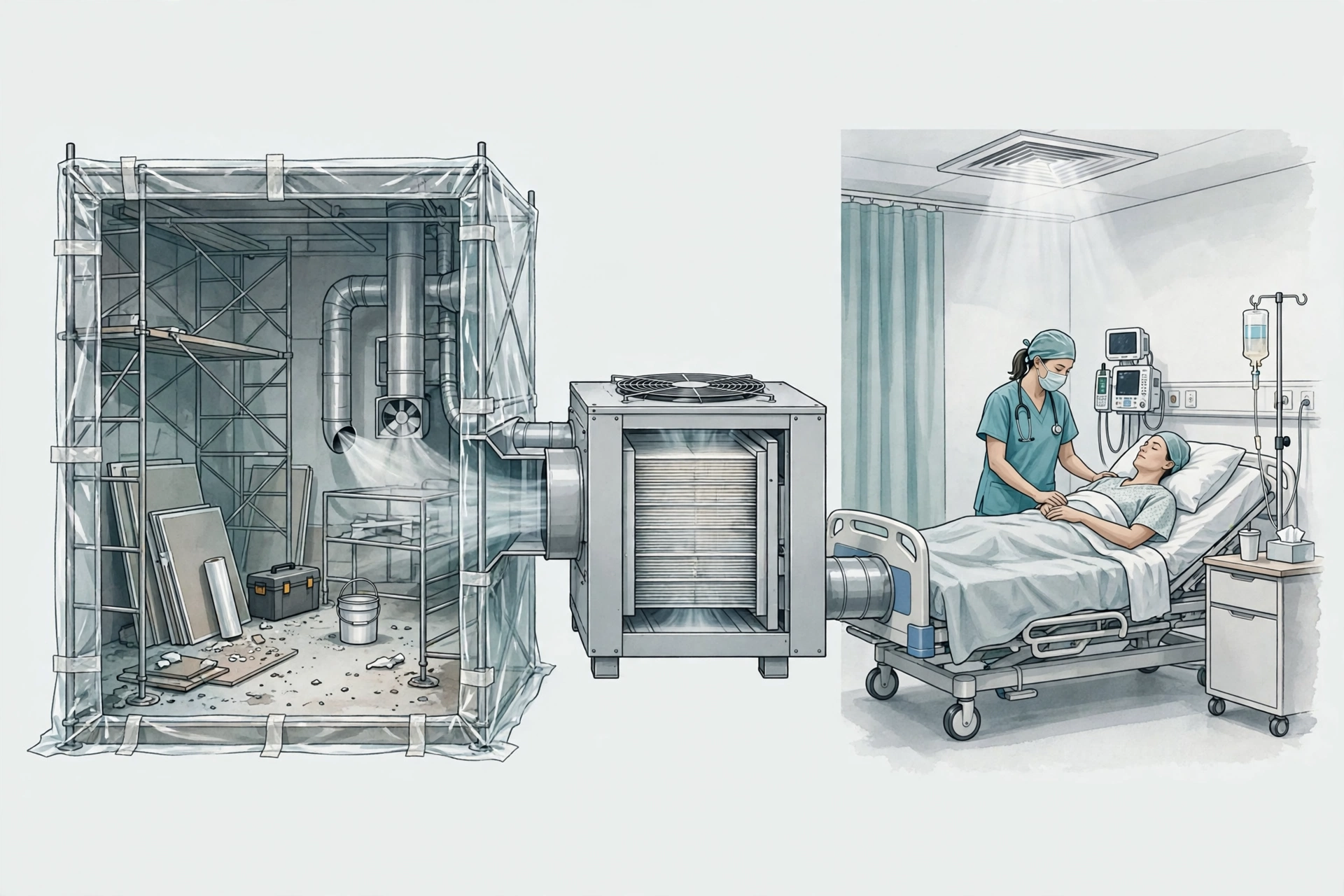
Protecting immunocompromised patients during renovation means layering controls around the highest-risk people: identify them first (bone marrow transplant, solid organ transplant, neutropenic oncology, high-dose steroid patients), then apply the strictest ICRA precautions nearest them — relocate them away from the work zone when possible, seal and negatively pressurize the construction area, isolate HVAC, enforce anteroom discipline, and heighten clinical surveillance for aspergillosis and Legionella for the project’s duration. The ICRA class follows the patient, not the project.
The protection layers
- Identify and map: list every immunocompromised population and its location relative to the work zone — including above, below, and adjacent.
- Relocate when feasible: BMT and transplant units are the strongest relocation candidates; if relocation isn’t possible, maximize distance and barriers.
- Maximum containment: Class IV/V precautions for work near these units — critical barriers, negative pressure, HEPA exhaust, anteroom.
- Air and water surveillance: watch for invasive aspergillosis cases; monitor water systems for Legionella where plumbing is disrupted.
- Staff education: nurses and physicians on affected units must know the signs of aspergillosis and the reporting chain.
Clinical vigilance
Invasive aspergillosis presents as persistent fever unresponsive to antibiotics in neutropenic patients — during construction near high-risk units, the threshold for antifungal workup should drop. The infection preventionist and the clinical team agree on this trigger before demolition starts.
The sickest patients get the strongest walls.
See why Aspergillus threatens construction zones and patient relocation decisions.
FAQ
Which patients are most at risk during hospital renovation?
Bone marrow transplant, solid organ transplant, neutropenic oncology, and high-dose corticosteroid patients — those vulnerable to invasive aspergillosis.
Should immunocompromised patients be moved during construction?
When feasible, yes — relocation is the strongest protection. When not feasible, apply maximum ICRA precautions and clinical surveillance.
What infection should clinicians watch for during renovation?
Invasive aspergillosis — persistent fever unresponsive to antibiotics in neutropenic patients near construction.