What is aspergillus and why is it a risk during hospital construction?
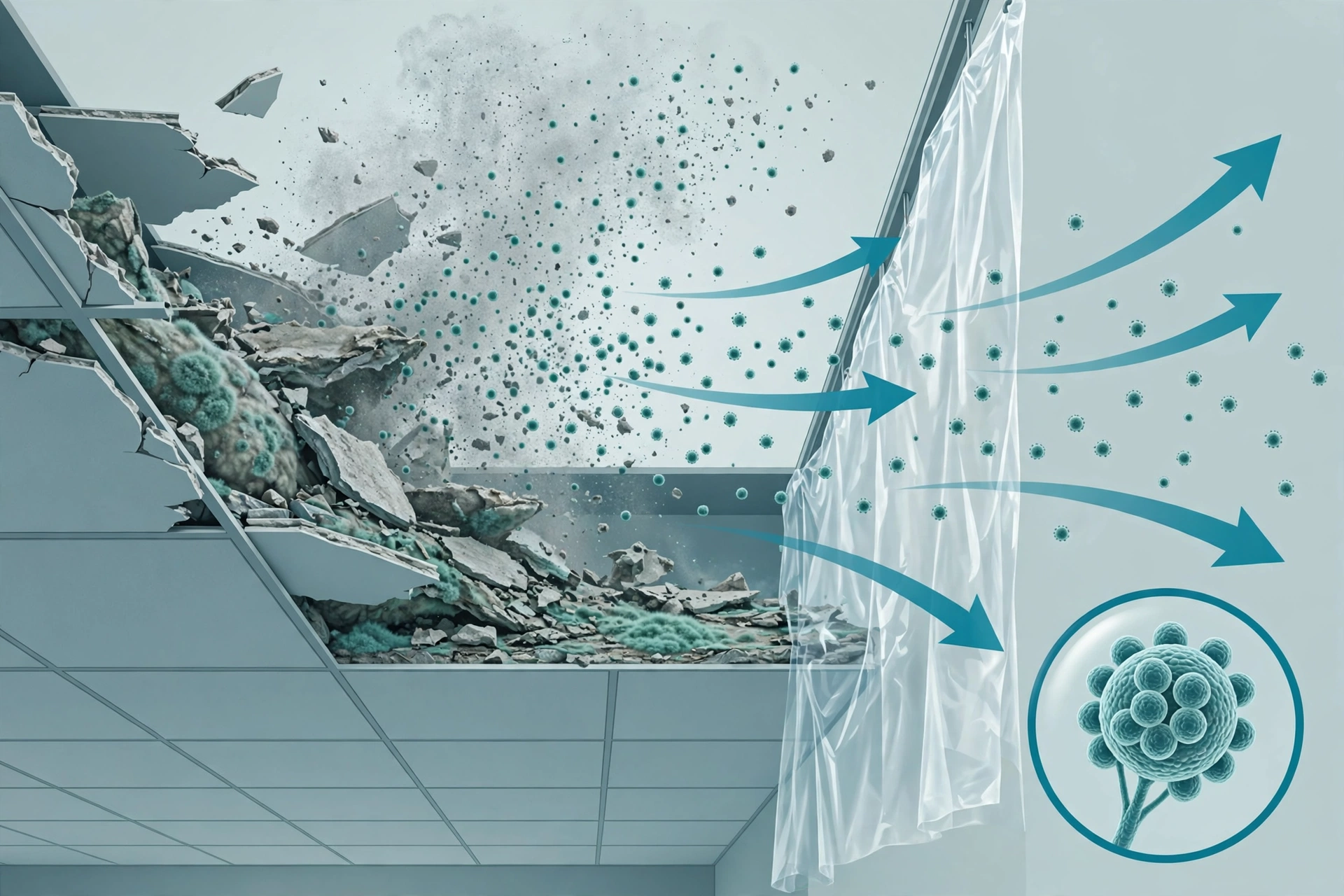
Aspergillus is a ubiquitous mold — its spores are everywhere in soil, dust, and building materials, harmless to healthy people. During hospital construction, demolition and renovation aerosolize massive quantities of spores. For immunocompromised patients — bone marrow transplant, solid organ transplant, prolonged neutropenia — inhaled spores can cause invasive aspergillosis, a deep lung (and sometimes disseminated) infection with high mortality. It is the defining infection risk of hospital construction, and the reason ICRA precautions exist.
Why construction makes it dangerous
- Spore reservoirs: settled dust in ceiling plenums, old ductwork, wall cavities, and soil hold enormous spore loads, undisturbed for years.
- Aerosolization: demolition, drilling, and even vibration release spores into the air in concentrations far above background.
- Transport: without containment and negative pressure, spores ride air currents into occupied patient areas — including floors above and below via shafts and plenums.
- Susceptible hosts: a spore dose that’s trivial for a healthy worker can be lethal for a neutropenic patient.
Prevention and vigilance
Prevention is the ICRA package: sealed barriers, negative pressure, HEPA filtration, HVAC isolation — plus relocating the highest-risk patients. Vigilance is clinical: during and after construction near vulnerable units, treat persistent fever unresponsive to antibiotics in neutropenic patients as possible invasive aspergillosis until proven otherwise, and investigate any cluster immediately. Post-construction surveillance should continue for weeks, since cases can present after exposure.
Harmless dust to you. Lethal to the patient down the hall.
See how construction spreads infections and protecting immunocompromised patients.
FAQ
What is Aspergillus?
A ubiquitous mold whose spores are present in soil, dust, and building materials — harmless to healthy people.
Why is Aspergillus dangerous during hospital construction?
Demolition aerosolizes large spore quantities; immunocompromised patients who inhale them can develop invasive aspergillosis, which has high mortality.
How is construction-related aspergillosis prevented?
ICRA containment (sealed barriers, negative pressure, HEPA filtration, HVAC isolation), patient relocation, and clinical vigilance for post-exposure cases.