What water system risks occur during healthcare construction?
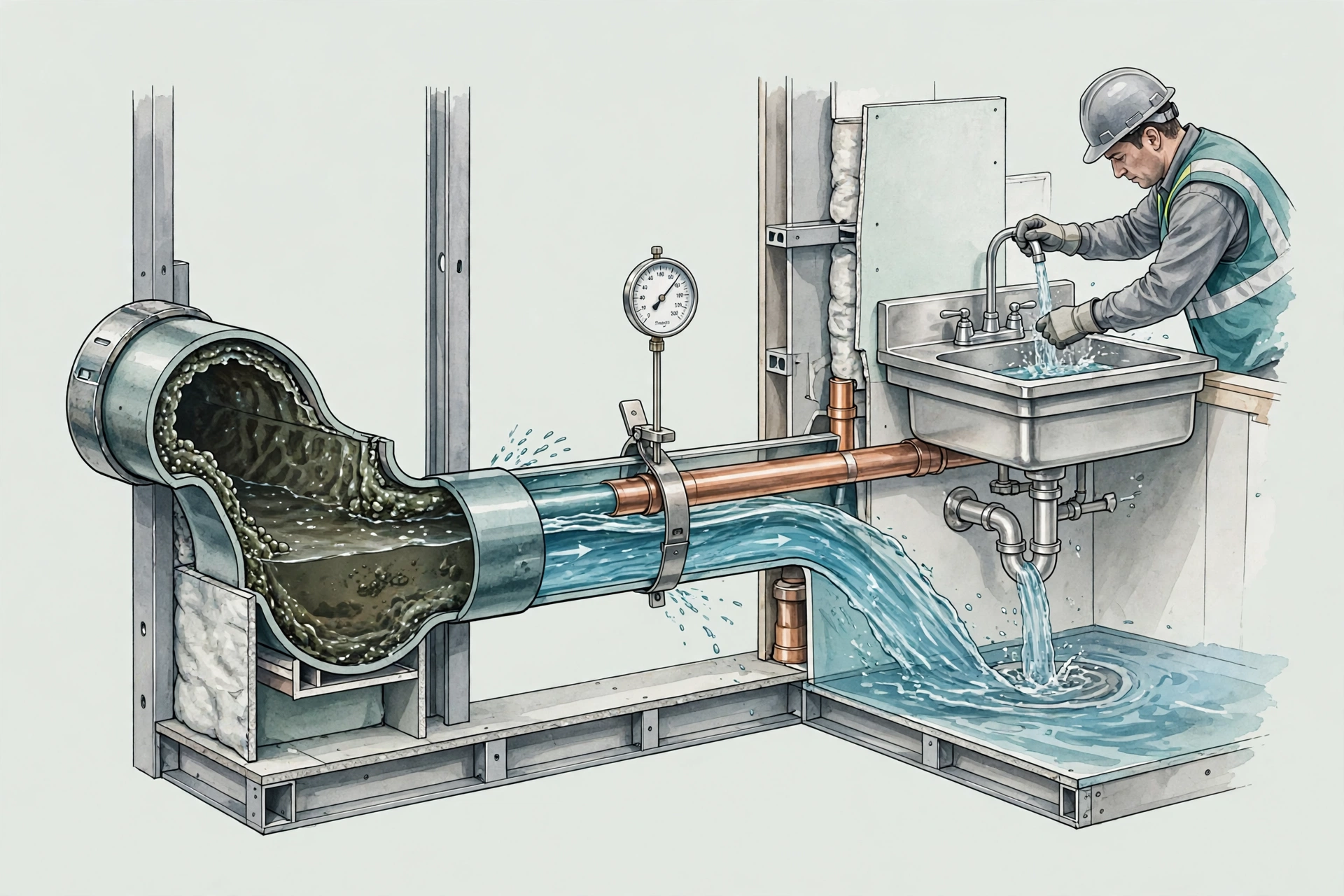
Construction creates Legionella amplification risks through water stagnation (shutdowns, capped lines, low-use areas), dead legs (abandoned piping left in place), temperature loss (hot water dropping into the 77–113°F growth range), disinfectant residual decay in aged water, and disturbance of biofilm that releases bacteria when flow resumes. CDC guidance: store hot water above 140°F, keep circulation at or above 120°F, keep cold water below the growth range, flush dead legs and low-flow runs at least weekly, and maintain detectable disinfectant residual throughout.
Related: ASHRAE 188 water management plan requirements — the Legionella standard CMS surveyors ask about.
The risk list
- Stagnation: shut down or rarely used lines age the water, deplete disinfectant, and warm into the growth range.
- Dead legs: capped or abandoned piping harbors biofilm; must be removed, not just capped.
- Temperature excursions: construction disrupts recirculation; tepid water (77–113°F) is the danger zone.
- Biofilm disturbance: vibration and pressure transients shear biofilm, seeding the system on restart.
- New piping: must be disinfected and flushed before connection to the potable system.
The water management response
Fold construction into the facility’s water management program (ASHRAE 188): map every affected line, schedule weekly flushing of dead legs and infrequently used fixtures, verify temperatures and disinfectant residual at sentinel points, remove dead legs rather than capping them, and flush and verify before returning lines to service. Consider Legionella testing in consultation with the water management team when risk is elevated.
Stagnant water is an incubator. Moving water is a defense.
See how construction spreads infections and the ICRA matrix.
FAQ
Why does construction increase Legionella risk?
Shutdowns and low flow cause stagnation, water age, temperature loss into the growth range, and disinfectant decay — ideal amplification conditions.
What temperatures control Legionella?
Store hot water above 140°F, circulate at or above 120°F, keep cold water below 77°F.
How often should dead legs be flushed during construction?
At least weekly, per CDC guidance — and dead legs should be removed, not just capped.