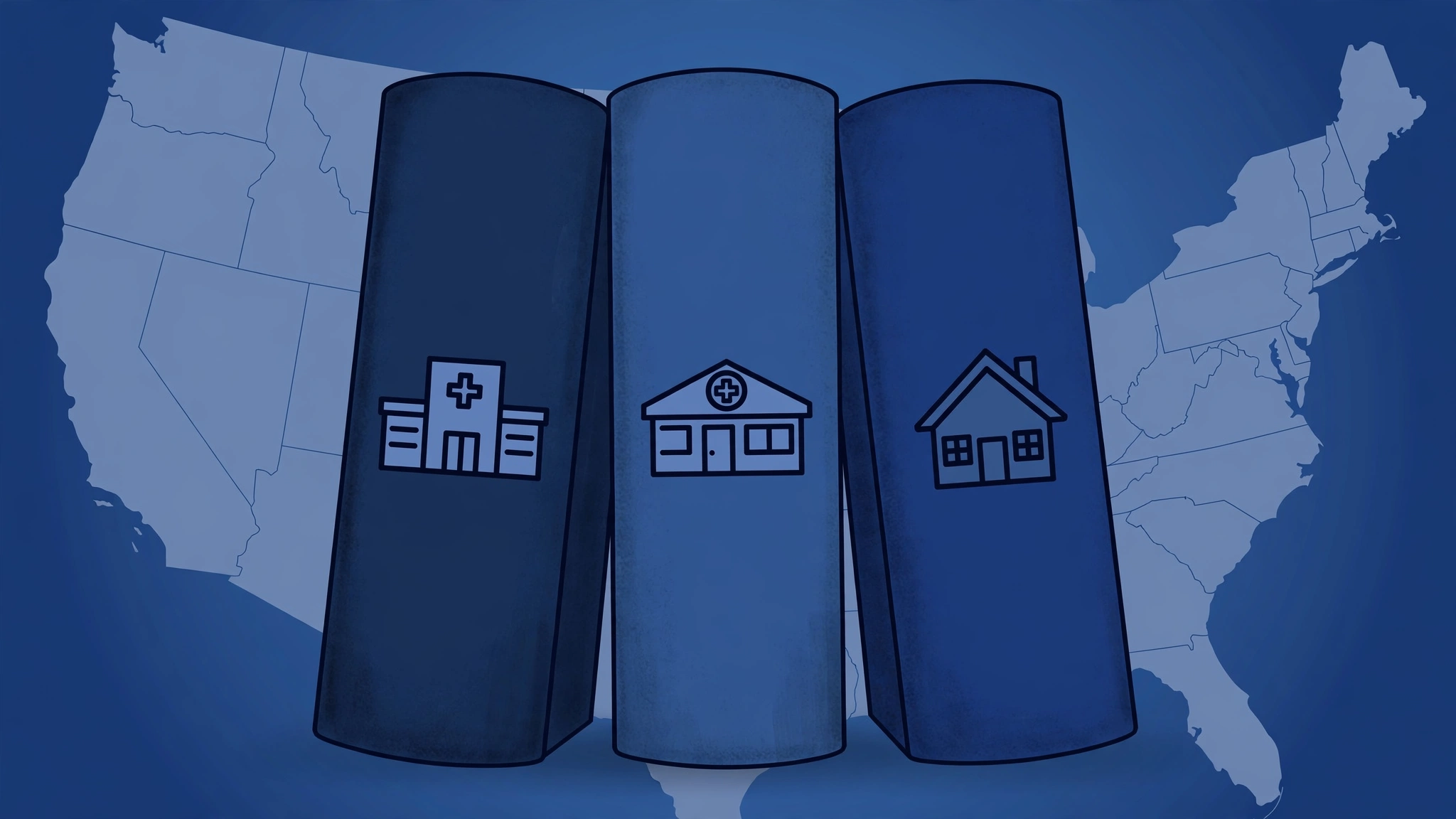
The FGI Guidelines — now the FGI Codes as of the 2026 edition — are the consensus-based minimum requirements for planning and designing hospitals, outpatient facilities, and residential care settings in the United States, published by the Facility Guidelines Institute every four years. They cover program, space, infection prevention, architectural details, and building systems — and 43 states have adopted them for regulating new construction and major renovations.
Take this to the job site.
This article as a one-page field sheet – the direct answer, the key numbers, and the checklist. Free PDF, prints clean, works offline.
The three documents
- FGI Code for Planning and Design of Hospitals — inpatient hospitals, including specialty units.
- FGI Code for Planning and Design of Outpatient Facilities — clinics, ambulatory surgery, imaging, and other outpatient settings.
- FGI Code for Planning and Design of Residential Health, Care, and Support Facilities — nursing homes, assisted living, hospice, and related residential settings.
Guidelines vs. Codes: the 2026 rename
The 2026 edition renamed the documents from “Guidelines” to “FGI Codes” — and the rename means something: the Codes now contain only minimum requirements. All the explanatory and advisory material that used to live in appendices moved to the new FGI Handbooks for Planning and Design (digital, subscription), which include the full Code text plus guidance, diagrams, checklists, and best practices. Minimum requirements vs. helpful guidance are now physically separated — which also makes the Codes more enforceable.
Are they mandatory?
FGI itself is a voluntary consensus standard — it becomes mandatory when adopted by a state or local jurisdiction (43 states have), or when required by an accreditor (Joint Commission, DNV) or payer. In practice, for most U.S. hospital projects, the adopted FGI edition functions as code.
Start with the edition your state enforces.
See the FGI 2026 compliance guide, which edition your state enforces, and how states adopt FGI into code.
FAQ
How FGI relates to the other standards a project must satisfy
FGI does not act alone on a healthcare project. The working relationships:
- ASHRAE 170 supplies the ventilation numbers — air changes, pressure relationships, filtration — for the rooms FGI defines. The interaction is treated in depth in ASHRAE 170 × FGI Guidelines interaction, and the isolation-room requirement set in ASHRAE 170 requirements for AII rooms.
- NFPA 101 governs life safety — egress, barriers, and the defend-in-place strategy — in the spaces FGI lays out.
- The CMS Conditions of Participation make the physical environment a federal participation requirement, which is why FGI-based design decisions surface again at survey time.
Who uses the Guidelines: design teams as the program and space standard for new construction and major renovation; facility teams as the reference when a renovation triggers compliance review — see how FGI Guidelines affect hospital renovation projects; and surveyors and authorities having jurisdiction, in states that have adopted an edition into licensure or building code — which edition governs a given project is answered in which FGI edition a state enforces. Access routes for a live project are in how to access the FGI Guidelines for a design project.
What does FGI stand for?
Facility Guidelines Institute — the publisher of the consensus-based planning and design requirements for U.S. healthcare facilities.
Are the FGI Guidelines mandatory?
They become mandatory when adopted by a state/local jurisdiction (43 states have) or required by accreditors like The Joint Commission and DNV.
What’s the difference between the FGI Codes and the FGI Handbooks?
The Codes (2026+) contain only enforceable minimum requirements. The Handbooks (digital subscription) contain the Code text plus explanatory guidance, diagrams, checklists, and best practices.
What are the FGI Guidelines for healthcare facilities?
The FGI Guidelines (FGI Codes from the 2026 edition) are the consensus minimum requirements for planning, designing, and constructing hospitals, outpatient facilities, and residential care settings in the US — covering program, space, infection prevention, architectural details, and building systems — published by the Facility Guidelines Institute on a four-year cycle and adopted by most states for licensure or code purposes.
Get the weekly brief
Surveys, water, plant and readiness — what we measured and what changed in facility operations, every week.