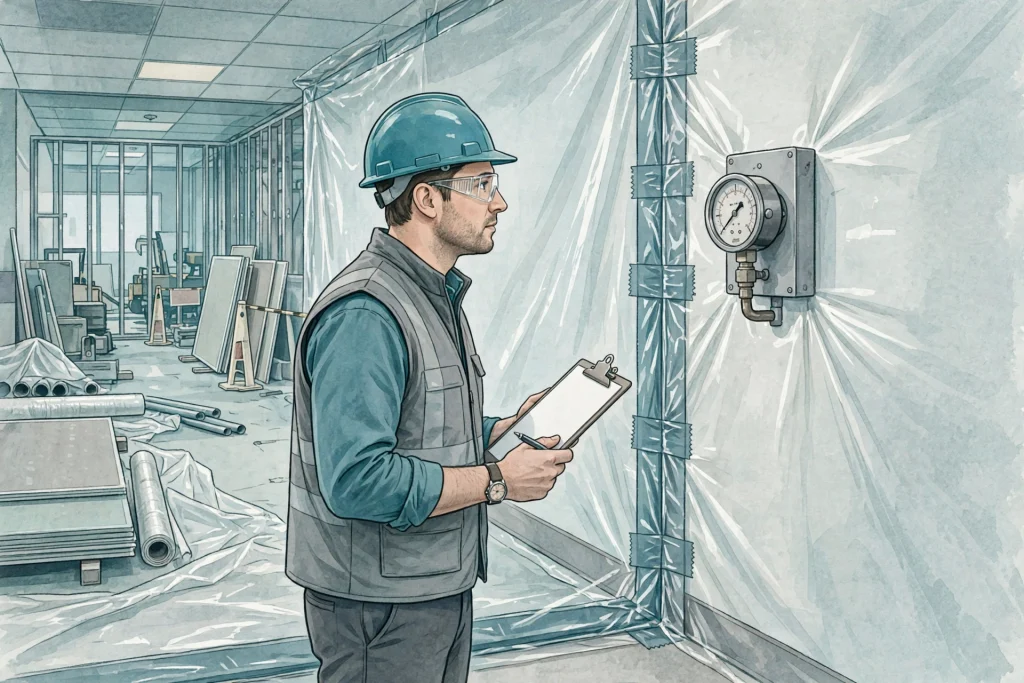
How Often Should ICRA Monitoring Be Done During Healthcare Construction
How often should ICRA monitoring be done during healthcare construction? Daily walkthroughs for Class III and above — continuous pressure

How often should ICRA monitoring be done during healthcare construction? Daily walkthroughs for Class III and above — continuous pressure
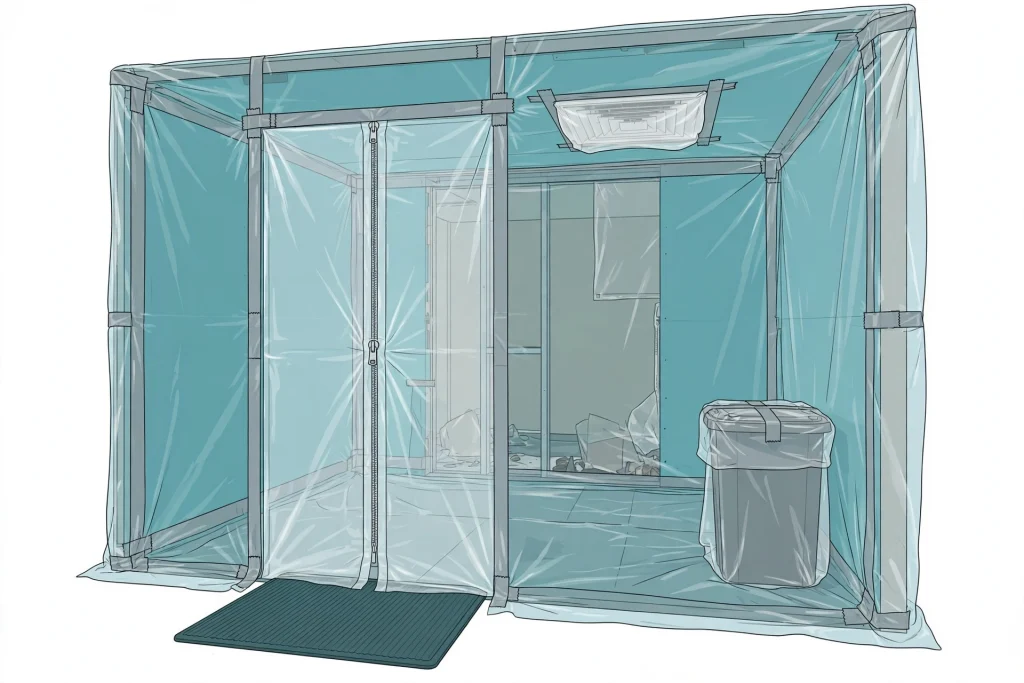
What barriers are required for ICRA Class III construction? Class III containment: critical barriers before work begins, HVAC isolation, sealed
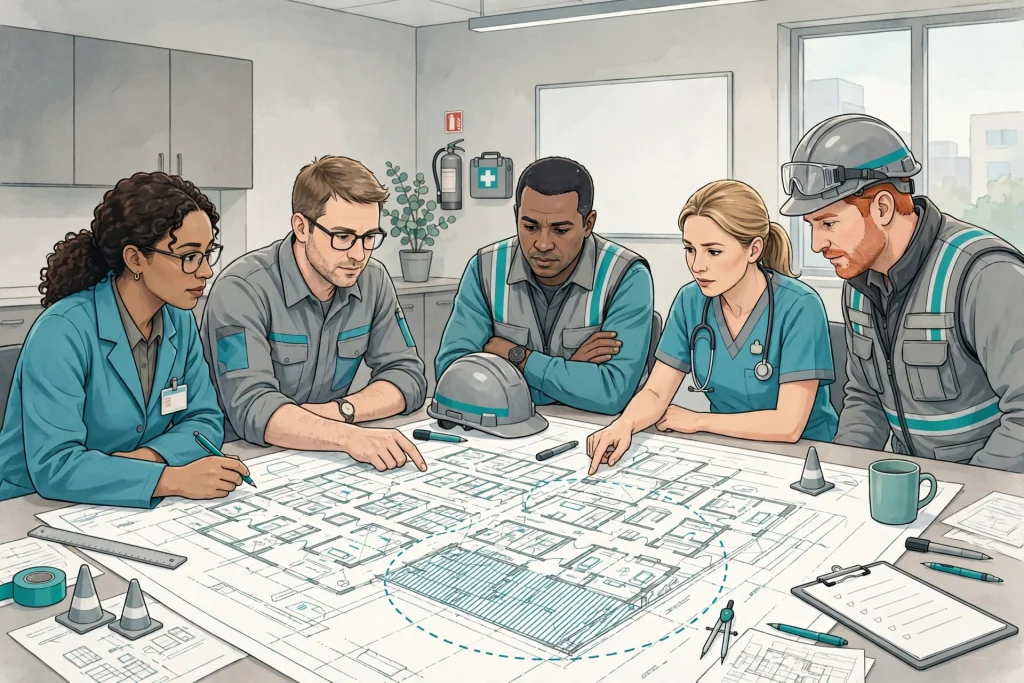
Who needs to be on the ICRA team for a hospital construction project? The ICRA team: infection prevention, engineering, construction,
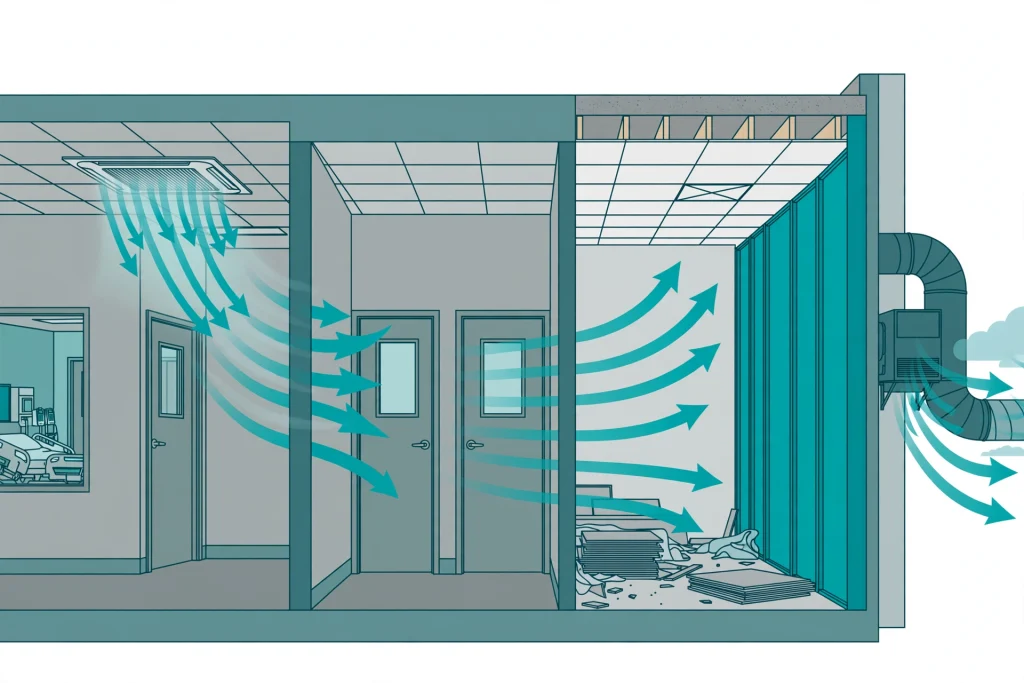
What is a Class IV construction barrier in healthcare? Class IV containment: hard barrier to the deck, anteroom, HEPA exhaust,
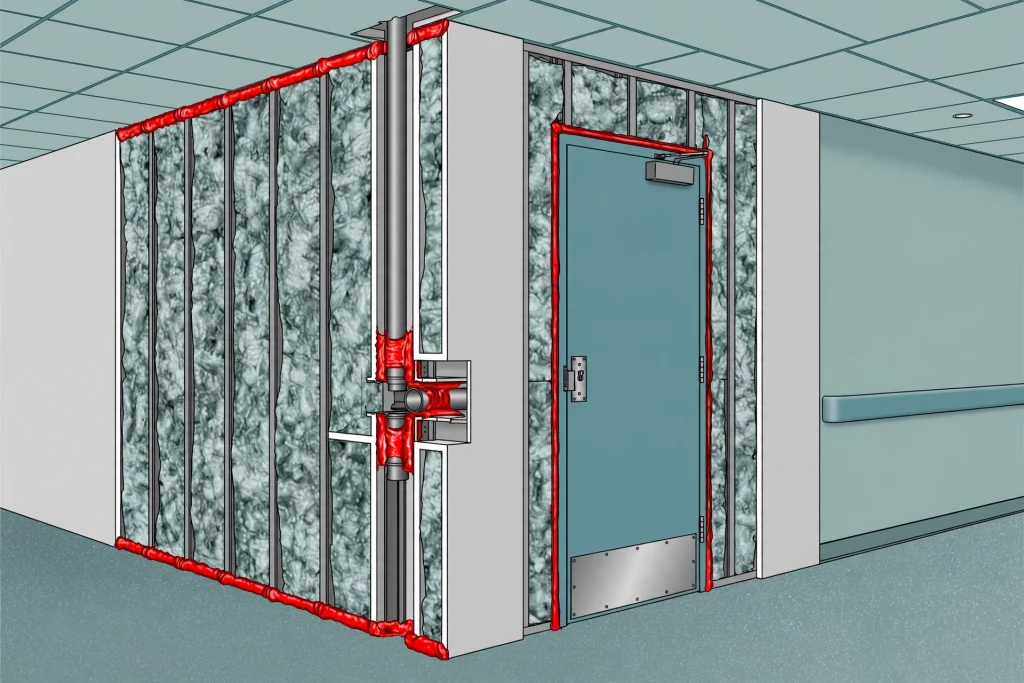
What fire rating do temporary construction barriers need in hospitals? A rated temporary barrier: sealed floor to ceiling, firestopped penetrations,

What mil polyethylene is required for ICRA containment barriers? Fire-retardant 6-mil polyethylene, sealed top to bottom with a full-length zipper
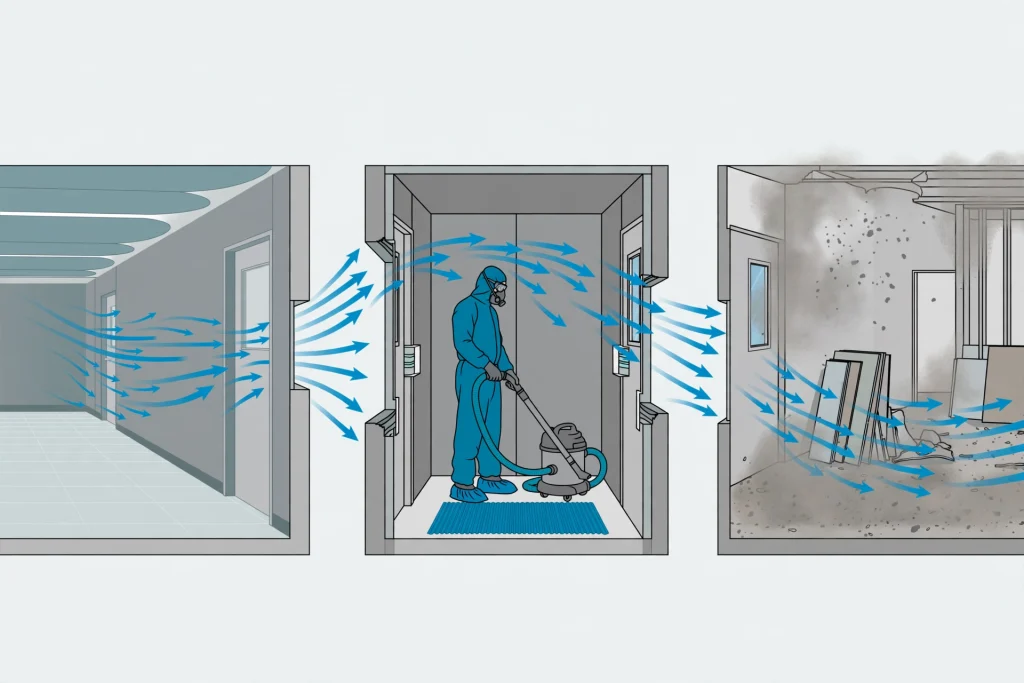
How do you build an anteroom for healthcare construction? The anteroom airlock creates a pressure cascade — corridor to anteroom
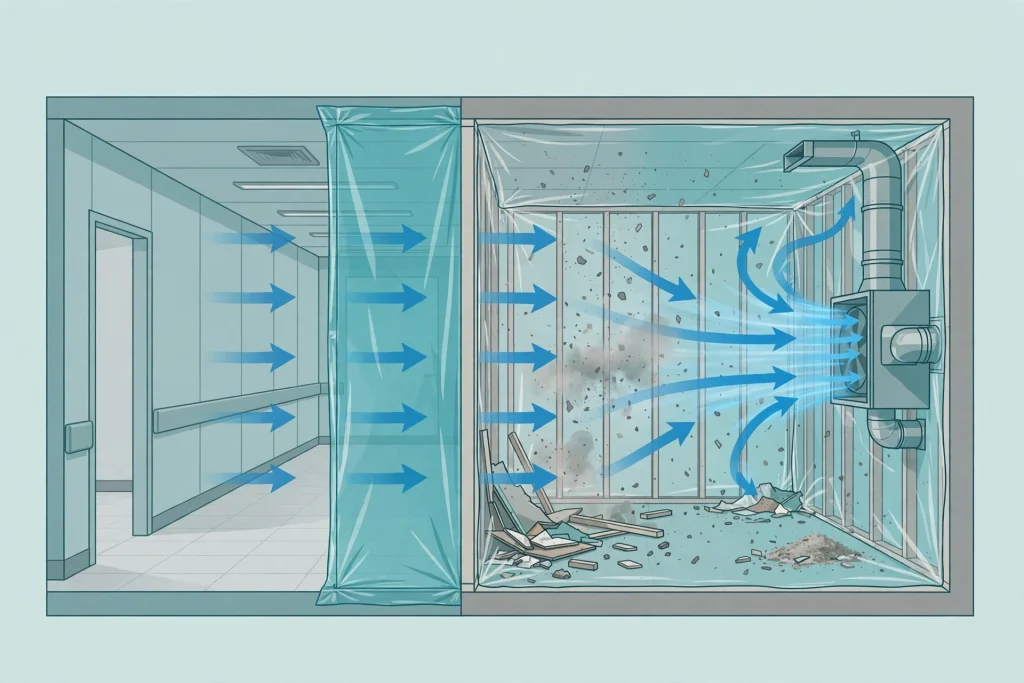
What is negative air pressure and why is it used in hospital construction? Negative pressure keeps air flowing inward —
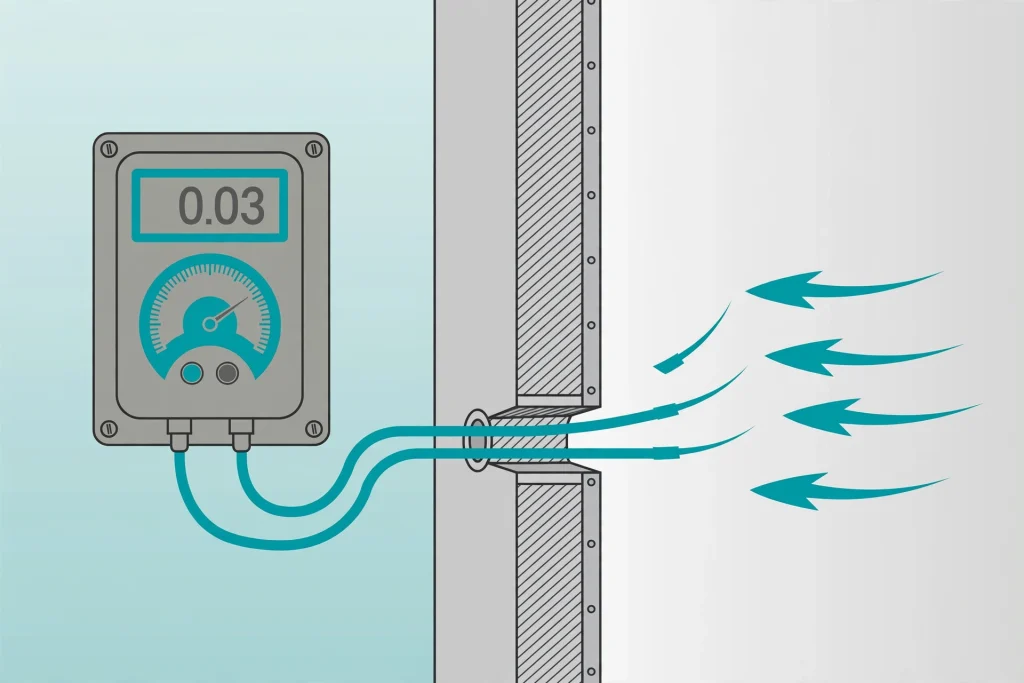
How do you monitor pressure differentials during hospital construction? A data-logging manometer in the anteroom proves the containment held negative
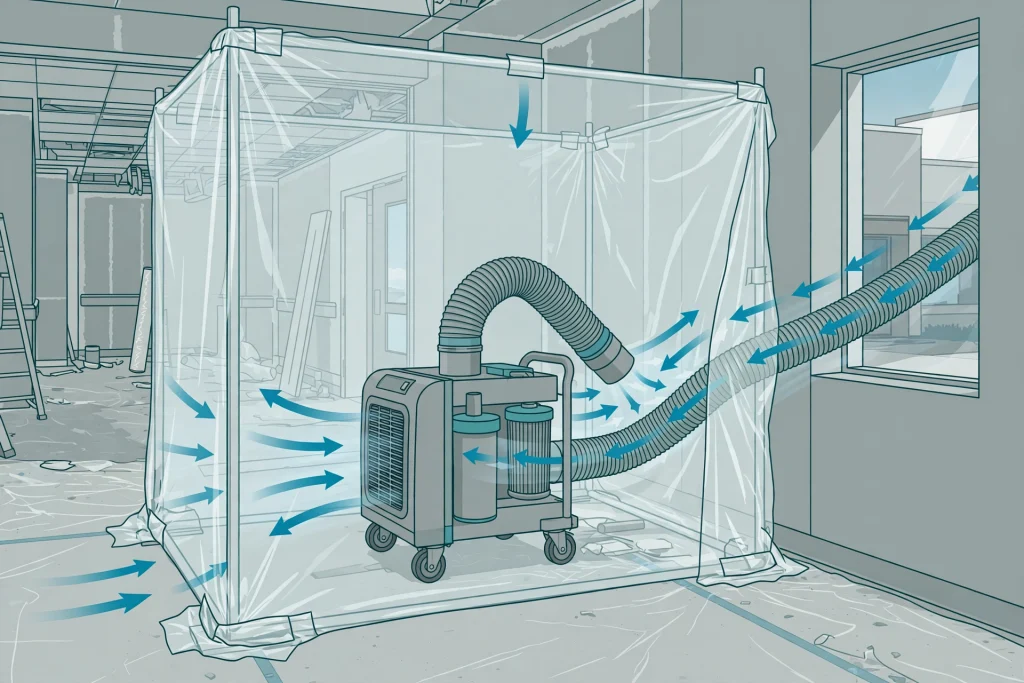
What is a HEPA-filtered negative air machine used for in hospitals? A HEPA-filtered negative air machine creates the negative pressure
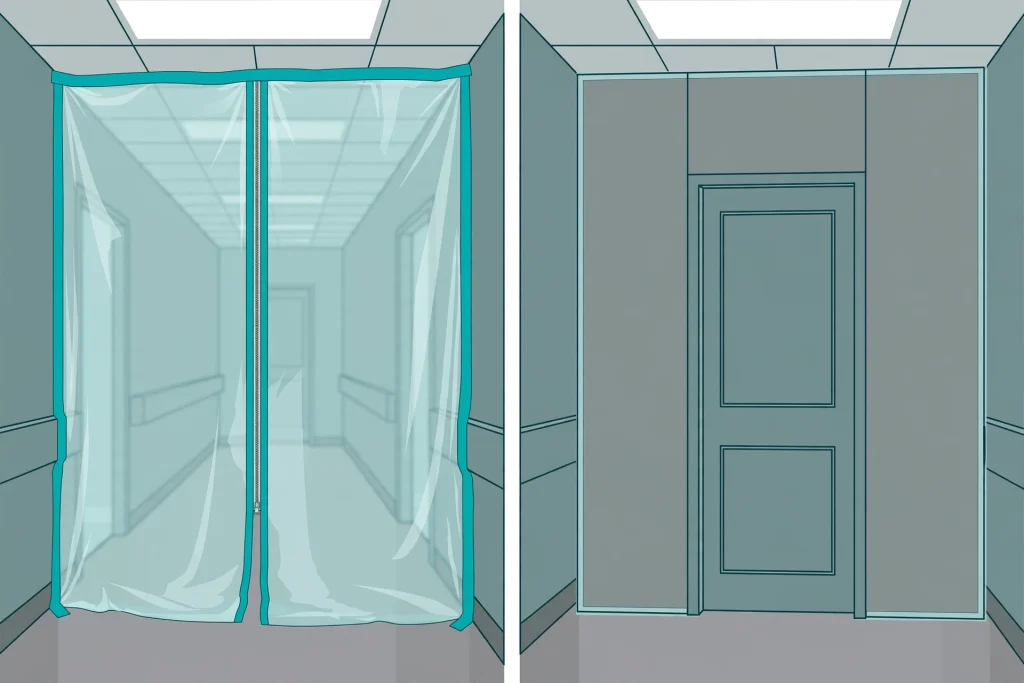
What is the difference between soft and hard containment barriers? Soft vs. hard containment barriers: 6-mil fire-retardant polyethylene sheeting (left)
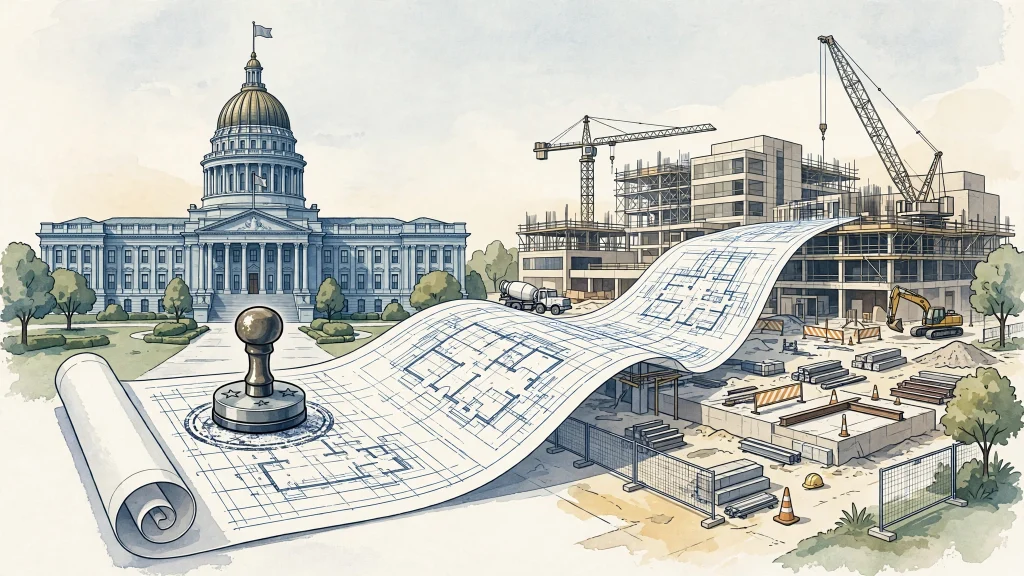
42 states adopt FGI by reference — usually through health facility licensing regs, parallel to the building code. How it works.
Healthcare Facility Hub — the weekly brief. Surveys, water, plant and readiness, every week.